Soil testing
In a landmark move with wide-reaching implications, four UK water companies (Affinity Water, South Staffs & Cambridge Water, Wessex Water and Southern Water) have partnered with Wildfarmed’s regenerative wheat farmers, offering financial incentives of up to £200 per hectare of retained nutrients.
The aim? To reduce agricultural run-off, limit pesticide pollution and improve the health of freshwater ecosystems, particularly by tackling eutrophication at the source.
This initiative represents a strategic shift: water utilities are investing directly in land management to reduce their downstream treatment costs.
For the environmental instrumentation sector, especially providers of soil and water quality testing equipment, this shift opens up new markets, demands and data challenges.
Eutrophication – excessive nutrient loading of water bodies, often from nitrogen and phosphorus in agricultural run-off – continues to plague rivers and lakes in the UK.
According to recent figures, 40% of English rivers are affected, leading to algal blooms that can cause steep declines in fish populations, even in marine areas at the mouth of eutrophied rivers.
Traditional solutions have focused on post-contamination treatment, often involving carbon- and energy-intensive technologies.
But a new logic is taking hold: prevention through regenerative agriculture.
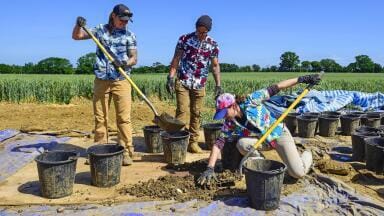
The new funding model supports farmers who commit to Wildfarmed’s audited regenerative standards.
These include:
Wildfarmed farmers operating in priority drinking water catchments have accessed the following payments:
These payments are in addition to the price premiums already secured by Wildfarmed for regenerative wheat.
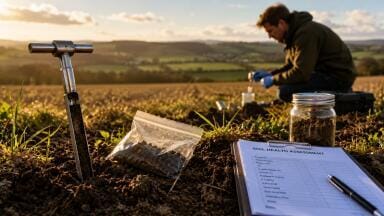
As this scheme expands, demand is likely to increase for precision instrumentation capable of tracking soil health, nutrient mobility, and water quality over time. Tools and technologies gaining traction include:
For instrumentation providers and users, the key opportunity lies in enabling traceability, verification, and feedback loops.
Water companies funding these premiums will want evidence of impact: less run-off, better soil infiltration, and reduced nutrient export from fields.
Affinity Water quotes a potential six-to-one return on investment when natural capital on farmland is properly protected or regenerated.
Affinity Water’s Catchment Manager, Danny Coffey:
“Soils farmed in a regenerative way can hold and prevent harmful contaminants getting into water abstracted for public supply and Wildfarmed's standards go a step further in ensuring that water quality is protected and we do not have to rely solely on energy and carbon intensive, end of pipe treatment.”
Wildfarmed’s standards go further than general regenerative frameworks by focusing explicitly on pesticide avoidance and catchment-sensitive cropping.
That emphasis makes precise, high-resolution monitoring all the more critical.
Wildfarmed is now recruiting growers for harvest 2025, when the water premium will first be paid.
As more farmers apply, consistent verification of regenerative practices will become crucial, not just for water companies but for investors and food retailers concerned with ESG and Scope 3 emissions.
This presents a need for standardised monitoring protocols, accessible data platforms and cross-compatible instrumentation that can deliver trusted, consistent readings across catchments.
Farmers shouldn’t have to juggle multiple reporting standards for each buyer or sponsor.
As private and public sectors co-invest in nature-based solutions, instrumentation professionals sit at the convergence point of agriculture, conservation, and utility operations.
The Wildfarmed model offers a testbed and commercial springboard for what effective, monitored ecosystem recovery can look like.
IET Guide 2026

 Product directory

















.jpg)