Portable & field testing
Published over 13 years ago. See the latest and most current information on Portable & field testing.
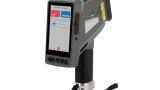
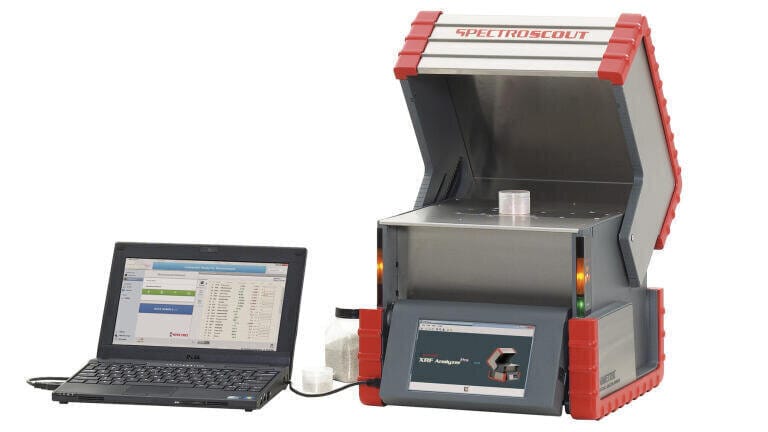
Launched in March 2013, Spectro Analytical’s (UK) new SPECTROSCOUT Portable Energy Dispersive X-ray Fluorescence (ED-XRF) analyser enables rapid, laboratory-class elemental analysis of environmental and geological samples even in remote locations.
Determining elemental compositions onsite, from far-flung mining and geological field operations to remote environmental locations, presents substantial challenges. Real-time analytical results are essential for assessing progress. And, accuracy is essential at all detection levels.
“Weighing only 12 kilograms and carried with a shoulder strap, the new SPECTROSCOUT portable ED-XRF analyser meets such challenges — in the field — with as much analytical power as top-grade laboratory benchtop analysers,” explains Dirk Wissmann of Spectro.
“The new SPECTROSCOUT is a small instrument, but a major step forward for end users. Its precision and speed in the field allow for faster decisions and improved productivity. Many laboratory-based measurements now become unnecessary,” notes Wissmann.
This portable analyser is ideal for onsite environmental and geological analysis. Designed for tough use, SPECTROSCOUT is encased in a rugged housing, and its X-ray source is protected. It is both lightweight (12 kg/26.46 lb) and small (270 x 306 x 306 mm/10.7 x 12.1 x 12.1 in) and includes a large sample compartment, X-ray tube, onboard processor, and high-yield battery pack. An optional integrated video system allows precise spot testing, plus image storage.
SPECTROSCOUT provides highly precise measurements from trace to minor and major concentrations across a range of relevant elements from heavy elements, such as uranium, to light elements, such as sodium, with rapid (typically 10 to 15 minutes) turnaround. The analyser also brings laboratory-class advantages, such as Spectro's advanced TURBOQUANT unknown-sample analysis and optional customer-specific calibrations.
IET 36.5 Sept/Oct 2026





 Product directory