Environmental laboratory
Published over 7 years ago. See the latest and most current information on Environmental laboratory.
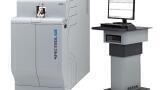
SPECTRO Analytical Instruments has published a new white paper, “A New Approach to ICP-OES Analysis for Environmental Testing.”
Environmental laboratories might like to standardise on one ICP-OES solution for most or all of their analysis needs. But different spectrometer types have different advantages and disadvantages for various applications. For instance, they derive diverse benefits from their internal plasma viewing technologies.
SPECTRO’s new white paper details how recent developments in viewing techniques helped create a versatile new type of spectrometer. Its brand-new dual side-on interface (DSOI) technology can offer significant advantages for environmental laboratories in routine applications, including waters, wastewaters, soils and sludges.
For instance, DSOI technology offers twice the sensitivity of conventional radial systems yet avoids the complexity, drawbacks, and cost of vertical dual view models. It provides high stability, the same high linearity as traditional radial-observation ICP-OES, improved ease of use and less maintenance requirements than vertical dual view systems. Additional advantages of the technique: only a measurement, using a single plasma view, is needed — a definite speed advantage compared to dual-view spectrometers.
IET Guide 2026

 Product directory