Leak detection
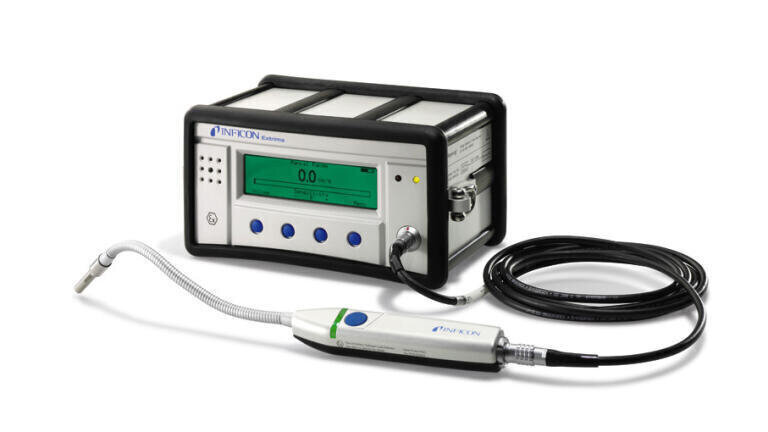
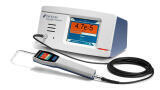
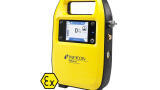
The world is shifting toward hydrogen-powered clean energy systems; ensuring safe, rapid leak detection in critical environments is critical. INFICON’s Extrima® is a high-performance, intrinsically safe hydrogen leak detector built for hazardous Zone 0 environments (Ex ia IIC T3), and certified by ATEX, IECEx, TIIS, NEPSI, and CSA.
Extrima® has been designed for environmental and industrial sectors focused on zero-carbon solutions. Extrima offers exceptional sensitivity: detecting leaks as small as 0.5 ppm or 5 × 10⁷ cc/s using forming gas, even faster and more precisely when deployed with pure hydrogen. These performance levels are ideal for maintaining integrity in fuel cell systems, hydrogen infrastructure, power generation, and aerospace applications.
The resilient Extrima is IP67-rated, battery-powered for more than 7 hours of continuous use, and operable in the harshest industrial conditions. In demanding sectors, including aerospace and power generation, Extrima has proven its ability to reduce leak-identification and repair times by over 50%, boosting both operational efficiency as well as environmental safety.
INFICON Extrima® delivers a considerable technological leap for hydrogen leak detection, combining intrinsic safety, sensitivity, and usability to facilitate safe deployment of hydrogen systems at scale.
IET 36.5 Sept/Oct 2026

 Product directory



















.jpg)