Environmental laboratory
Published over 12 years ago. See the latest and most current information on Environmental laboratory.
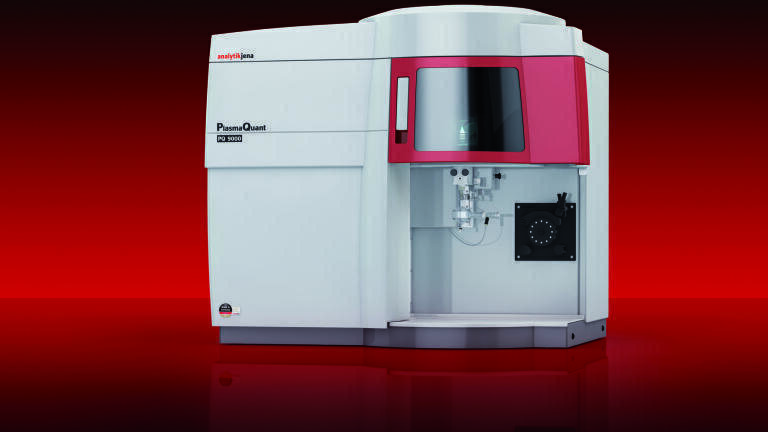
Within its core segment for analysis measuring technology, Analytik Jena AG (Germany) now offers with the PlasmaQuant PQ 9000 its first High-Resolution Array ICP OES (optical emission spectrometry using inductively coupled plasma) for multiple element analysis as part of its own technology portfolio. This method is routinely used for determining smallest element concentrations especially in environmental analysis, material research, metal or pharmaceutical industries. In the important markets for these products such as China, Japan and Thailand it was already launched in autumn 2013. In Germany, it will be introduced at the leading analytica industrial exhibition in April 2014.
"The PlasmaQuant PQ 9000 has been developed to master the most complicated analytical challenges in emission spectrometry with the highest degree of precision, method flexibility and operating comfort. In doing so, we are building on our longstanding experience in the development of high-end spectrometers", said Torsten Olschewski, General Manager of the Analytical Instrumentation business unit at Analytik Jena AG.
Technological advances in the product include the optical resolution, the plasma torch design and the generation and observation of the plasma. "With its array technology, excellent spectral resolution and the clever design of the plasma torch, the PlasmaQuant PQ 9000 is a specialist for demanding samples and complicated matrices. It is high-performing in identifying spectral interferences. Thus it permits a precise evaluation of analysis results of samples with high salt content or just traces of elements as well as of acids and bases", Olschewski added.
The PlasmaQuant PQ 9000 also allows for the safe analysis of rare earth metals such as cerium, lanthanum, neodymium or samarium in silicate-containing minerals. The high salt contents in these minerals (silicates) are not a problem thanks to the technology of the PlasmaQuant PQ 9000 system. Spectral interferences caused by the high contents of these samples of main group elements such as sodium, aluminum or silicon can be detected with the help of high resolution and easily corrected.
Another application is the analysis of biodiesel for traces of metals such as sodium, potassium or manganese. These lead to foaming of the fuel and thus to unstable or lower performance as well as clogging of filters. Other trace elements to be controlled are phosphorus and sulphur, which are known as catalyst poisons. In addition, the sulphur dioxide produced during combustion is an environmental pollutant.
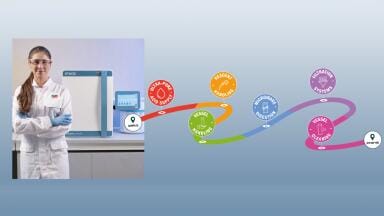
PlasmaQuant PQ 9000 offers: Clever bench-top design, Innovative high-end technology, Impressive analytical performance, High sample efficiency, Benchmark-setting operating comfort, Premium quality - "Made in Germany"
IET 36.5 Sept/Oct 2026





 Product directory