.jpg)
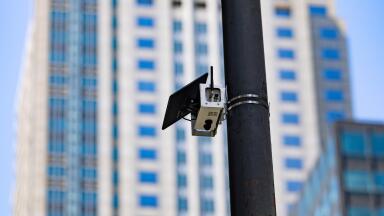
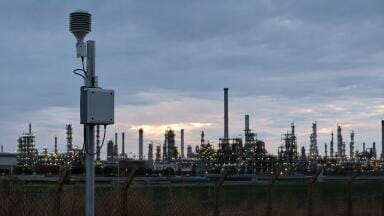
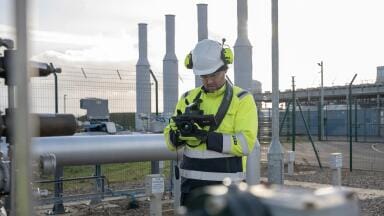
Air quality monitoring
It sounds perverse, even absurd.
But that’s the conclusion of new research presented at the Exeter Climate Forum.
Using satellite data from NASA’s CERES instruments, Peter Cox and Margaux Marchant at the University of Exeter have found that two-thirds of the warming since 2001 could be due to one overlooked factor: falling sulphate emissions.
The cleaner the skies get, the more heat the planet traps.
Welcome to the pollution-climate paradox — where saving lives with clean air may be hastening planetary overheating.
For decades, sulphate aerosols from coal-fired power stations, diesel ships, and heavy industry have acted as an accidental sunshade.
These particles don’t just harm lungs, they brighten clouds.
Denser, more reflective clouds bounce more sunlight back into space, a phenomenon known as the Twomey effect.
The result? A veil of cooling, hiding the full force of greenhouse warming.
But since the early 2000s, sulphur pollution has declined rapidly thanks to tighter fuel standards and public health regulations.
That veil is lifting.
Cox and Marchant’s analysis of CERES data shows a consistent global drop in the Earth’s albedo.
The planet, they argue, is literally darkening. Clouds are becoming less reflective, meaning more solar radiation is being absorbed by land and sea.
Their work correlates this shift strongly with declining sulphur dioxide (SO₂) emissions, particularly over industrial and shipping regions.
And here's the kicker: this warming surge is not caused by rising carbon dioxide levels, but by their long-delayed revelation.
The planet is now experiencing the warming that dirty air once masked.
This is what scientists call a transient climate forcing: a short-lived process with a long-lasting impact.
Sulphate aerosols have an atmospheric lifetime of just days or weeks — unlike CO₂, which persists for centuries.
That’s why the warming effect from aerosol cuts unfolds quickly.
But once the cuts stop, the extra warming levels off. It doesn’t keep climbing indefinitely.
So why call it “temporary”?
Because the cause — falling pollution — is a one-off shift, not a feedback loop.
If aerosol levels stabilise, the extra warming stabilises too.
But the damage is already done: the global temperature has been ratcheted up by a fraction of a degree, and that new baseline sticks.
Think of it like removing a sun umbrella in the middle of a heatwave.
The umbrella’s absence won’t make it hotter every hour — but it will make you hotter than you were, and you’ll stay that way until the sun dims or someone invents a new umbrella.
For environmental monitoring experts, this research opens up a number of pressing questions:
Are our climate models underestimating short-term warming due to insufficient treatment of aerosol-cloud interactions?
Should policymakers recalibrate targets like the 1.5 °C goal in light of this aerosol-driven “hidden warming”?
Can instrumentation networks detect and quantify the regional impacts of these shifts, especially over maritime corridors and industrialised coastlines?
If the Cox–Marchant findings hold up under peer review, they underscore a vital lesson: air quality and climate change are deeply intertwined, but not always aligned.
What protects human health in the short term may unmask environmental risks in the medium term.
That’s not an argument against cleaning the air because the health benefits are incontrovertible.
But it is a call for faster CO₂ reductions to compensate for the warming we’ve just unlocked by doing the right thing.
This story also reopens discussions around controversial technologies like marine cloud brightening, a form of geoengineering that tries to recreate the cooling effect of sulphates without the toxic pollution.
If this warming surge is indeed a one-time bump, such proposals might look less necessary.
But if global sulphur cuts continue into the 2030s, as expected, there’s still warming “in the pipeline”.
Monitoring will need to keep pace.
That means expanding satellite observation of cloud properties and albedo as well as improving attribution of warming sources in climate models.
Developing high-resolution SO₂ tracking, especially in rapidly industrialising regions, and tracking regional ocean warming linked to aerosol declines
It also means preparing the public — and the policy world — for the dissonance ahead.
As air gets cleaner, warming may worsen. That’s not a policy failure. It’s the complex reality of overlapping environmental timelines.
In climate science, this trade-off has long been called a Faustian bargain.
We bought time with dirty air, but now the devil’s come to collect.
The new research suggests that warming acceleration in the past two decades may not reflect some new climate tipping point, but rather the bill finally coming due.
That’s sobering. But it’s also oddly hopeful.
Because if we’re seeing this spike due to pollution controls, it means we haven’t yet reached the climate’s full runaway potential.
There’s still time, but only if we accelerate long-term action on CO₂ and methane.
IET Guide 2026

 Product directory

















_-_DPLA_-_8e999bde09706920af593c74dca.jpg)