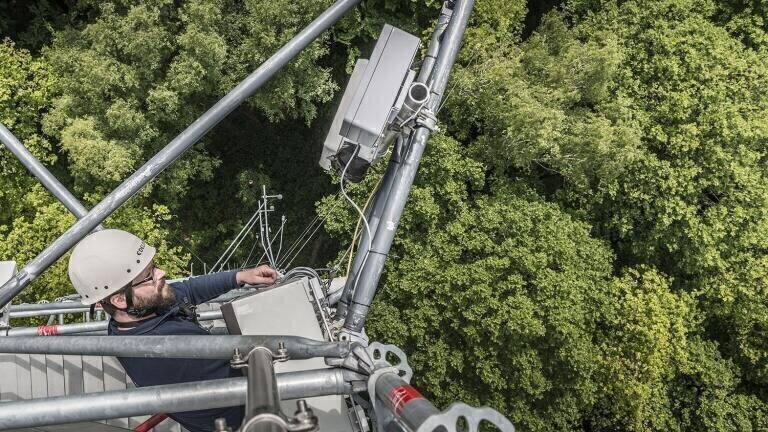
Air monitoring
These microscopic sensor motes could soon turn every landscape into a live data field, capturing micro-changes in air, water, soil and temperature that today’s monitoring networks can’t reach.
But scaling up from lab prototypes to global deployments raises tough questions about power, accuracy and ethics.
Smart dust refers to networks of tiny microelectromechanical systems (MEMS) that combine sensors, computing, communication and power within volumes measuring a few cubic millimetres.
Conceived in the mid‑1990s at the University of California, Berkeley, each “mote” typically includes sensors for temperature, humidity, light, vibration or chemical composition, a microprocessor for data processing, a communication system (radio frequency or optical) and a power supply.
Researchers envision deploying swarms of these motes across landscapes to collect high‑resolution environmental data that traditional monitoring networks cannot achieve.
Smart‑dust networks promise to transform environmental monitoring across agriculture, wild landscapes, urban environments and aquatic systems.
In precision agriculture, distributed motes monitor soil moisture, nutrient levels and pH so that farmers can target irrigation and fertiliser, reducing water use by up to 30 % and fertiliser application by 20–40%.
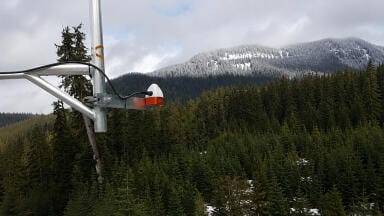
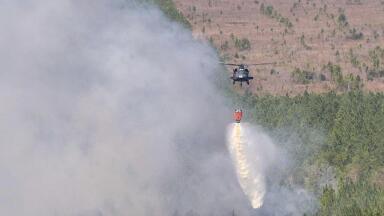
In forests, biodegradable motes dispersed by drones gather microclimate data, identify early fire signals and track wildlife movements without disturbing habitats.
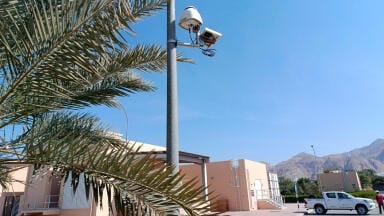
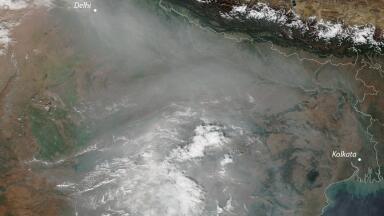
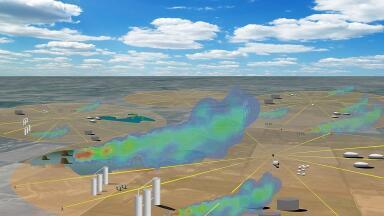
Urban deployments embed sensors in street furniture to measure particulate matter, nitrogen dioxide and noise on a block‑by‑block basis, revealing pollution hotspots that static stations miss.
Aquatic motes float through rivers, reservoirs and coastal waters to record temperature, turbidity, dissolved oxygen and pollutant levels in real time, giving early warning of algal blooms.
On a regional scale, large networks of motes help climate researchers map microclimate patterns and refine models.
Together, these examples demonstrate how distributed sensing offers high spatial and temporal resolution, scalability and the ability to capture subtle environmental variations.
The proliferation of low‑cost air‑quality sensors offers insight into the promise and limitations of distributed sensing.
A 2025 scoping review notes that low‑cost sensor networks provide affordable, high‑resolution data and increase public participation but face challenges in accuracy, calibration and standardisation.
Cross‑sensitivity to humidity and temperature, sensor drift and short lifespans require frequent recalibration.
The review highlights a lack of unified performance metrics, protocols and data‑sharing standards, making it difficult to compare results across networks.
These issues will also affect smart‑dust deployments, where thousands or millions of motes generate heterogeneous data streams.
Despite their potential, smart‑dust systems face significant engineering obstacles.
Energy harvesting through solar cells, vibration or thermal gradients remains limited, constraining how frequently motes can sense and communicate.
Radio‑frequency transmission consumes substantial power and requires relatively large antennas, while optical communication, though more energy efficient, demands line‑of‑sight and is susceptible to weather.
Motes must also be robust enough to survive temperature extremes, moisture and physical disturbances; developing biodegradable materials that minimise ecological harm is an active area of research.
Because millions of motes may generate terabytes of data, network architects are turning to edge computing and on‑board machine learning algorithms to reduce transmissions, but these techniques require more powerful processors.
Finally, proprietary designs and incompatible communication protocols hinder interoperability, underscoring the need for open standards to allow heterogeneous devices to work together.
Addressing these challenges will require innovations in MEMS fabrication, power management, communication protocols and software.
The invisible nature of smart dust raises profound ethical questions.
Pervasive motes can collect information without individuals’ knowledge, creating privacy concerns and potential surveillance abuses.
Networks are vulnerable to cyberattacks, data manipulation and dual‑use scenarios, where environmental monitoring tools could be repurposed for military or surveillance applications.
Regulatory frameworks have yet to grapple with issues such as ownership of airspace at microscopic scales, liability for environmental impacts and data governance.
Ensuring transparency and consent will be critical for public acceptance of smart dust technologies.
Despite these challenges, the future of distributed sensing is promising.
Advances in materials science (e.g., graphene), energy harvesting and machine learning are making motes smaller and more energy efficient.
Researchers envision networks with “swarm intelligence,” where motes collaborate autonomously, adapt sampling strategies and integrate with satellites or drones to form multi‑scale sensing systems.
The convergence of smart‑dust networks with remote sensing data and edge AI could yield unprecedented environmental intelligence.
However, to realise this vision, stakeholders must invest in standardisation, ethical frameworks and public engagement.
Just as low‑cost sensors taught researchers the importance of calibration and data quality, smart‑dust projects must prioritise accuracy, trust and sustainability to avoid becoming environmental litter.
IET Guide 2026

 Product directory




















.jpg)