Water testing
Weed‑management experts recently highlighted that the effectiveness of pesticides can hinge on water quality and yet very few growers have their water tested.
The same sentiment is echoed in a livestock extension bulletin that observes we routinely test soil, plants and feed but rarely scrutinise the water our animals drink.
In other words, water testing, especially for hardness, is not yet embedded in agricultural practice, even though the stakes are high for crop yield and equipment longevity.
Water hardness refers to the concentration of dissolved calcium and magnesium in water.
These minerals are expressed as an equivalent weight of calcium carbonate (CaCO₃) in parts per million (ppm) or grains per gallon.
Hardness is often accompanied by high alkalinity; both parameters can fluctuate depending on the water source.
Groundwater acquires mineral content as it percolates through soil and rock, so well water often has higher hardness and salinity.
Surface water in ponds or streams may vary seasonally with rainfall and evaporation.
Because groundwater hardness changes little over time, a spring and autumn test may suffice, whereas surface water should be monitored more often.
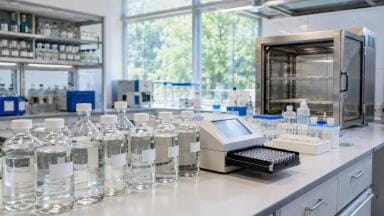
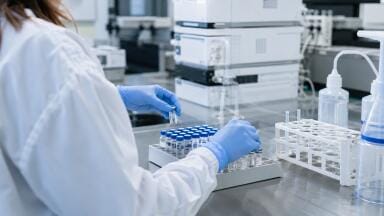
Measuring hardness typically involves handheld colorimeters or laboratory analysis, since simple test strips provide only a rough estimate.
Agricultural extension services or pesticide suppliers can arrange laboratory testing to establish a baseline.
Despite the availability of inexpensive test kits, many growers remain unaware of the impact of water hardness on farm operations.
Many online guides point out that water quality can significantly affect herbicide performance and that very few growers test their water.
Livestock specialists likewise note that water testing is often overlooked.
Researchers in Arkansas had to launch a statewide survey to gather basic data on water pH and hardness because such information simply did not exist.
The lack of monitoring obscures problems such as mineral binding in herbicide tank mixes, scaling in irrigation equipment and subtle nutrient imbalances in soil.
Understanding and managing hardness can unlock several benefits.
Herbicides and pesticides are formulated to work at specific pH and mineral concentrations.
Calcium and magnesium ions in hard water can bind to weak‑acid herbicides, forming complexes that are less soluble or less readily absorbed by weeds.
Studies show that glyphosate efficacy declines when water hardness exceeds about 250 ppm as CaCO₃ sprayers.
Saskatchewan’s crop protection guide recommends keeping hardness below 350 ppm when using low rates of glyphosate and reducing carrier water volume if hardness is between 350 and 700 ppm.
Without measuring hardness, growers may unknowingly dilute the active ingredient or waste money on repeat applications.
Adjustments are straightforward once hardness is known: ammonium sulfate is often added to free glyphosate from calcium and magnesium ions, and farmers who correct their water pH and hardness frequently report improved weed control.
Herbicide labels often contain guidance on acceptable hardness levels, so testing is a prerequisite for compliance.
Limescale from hard water can clog drip emitters and coat the inside of pipes, restricting flow and leading to uneven water distribution.
Sprinkler heads, pumps and valves corrode faster in hard water, increasing maintenance costs.
On the soil side, irrigating with water rich in bicarbonates raises alkalinity and can cause nutrient deficiencies; high levels of dissolved salts or an imbalanced calcium‑to‑magnesium ratio disrupt nutrient uptake.
Monitoring hardness helps farmers decide when to install a softener or choose alternative water sources, and to adapt fertiliser programmes to maintain soil fertility.
Hard water can influence animal health by increasing salinity and altering taste.
Groundwater with high mineral content is particularly prone to such issues.
Penn State Extension reports that total dissolved solids (TDS), which include calcium and magnesium, are a primary indicator of water quality for livestock and that high TDS can reduce intake or cause digestive upset.
Sodium‑based water softeners may exacerbate salinity.
Regular testing, especially during seasons of high rainfall or drought, allows farmers to monitor salinity and adjust water sources or treatment accordingly.
Without hardness data, it is difficult to trace problems back to water quality.
Milk quality depends on effective cleaning of milking equipment.
Extension dairy scientists advise that cleaning protocols should start with an analysis of the water supply for mineral content.
When hardness exceeds 10 grains per gallon (≈170 ppm), detergent concentrations must be increased; at 30 grains per gallon (≈510 ppm), a water softener is recommended.
Hard water bicarbonates, sulphates and chlorides neutralise detergents and leave films or milkstone deposits.
Accurate hardness measurements enable dairy farmers to select compatible cleaning agents and maintain equipment hygiene, ensuring compliance with food safety standards.
In controlled‑environment agriculture, water hardness can shape substrate pH and the balance of calcium and magnesium available to plants.
Greenhouse growers are advised to measure hardness when water alkalinity is high, especially if levels exceed 150 ppm.
The ideal ratio of calcium to magnesium is about 3 to 5 parts Ca to 1 part Mg.
Excessive magnesium or calcium can inhibit uptake of other nutrients, leading to deficiency symptoms.
Testing options range from simple strips to handheld colorimeters or commercial lab analysis.
Based on test results, growers can adjust lime sources, fertiliser blends or even install potassium‑based water softeners to correct the balance.
Hardness can be measured with various tools.
Test strips provide a quick, qualitative check and are useful for spot checks.
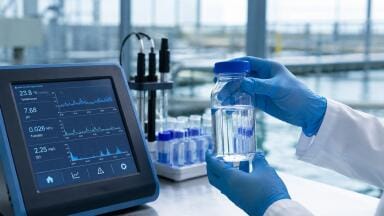
For more precise data, growers can use titration kits or handheld colorimeters that quantify calcium and magnesium concentrations.
Laboratory analysis remains the gold standard, providing a full profile of hardness, bicarbonates, salinity and pH.
Since groundwater hardness tends to remain stable, a Spring and Autumn test is usually adequate for spray water.
Surface water should be tested more often because rainfall and evaporation can change mineral content.
Farmers should also check the pH of the spray tank after adding pesticides, as the chemicals themselves can alter the pH and influence effectiveness.
The evidence suggests that most farmers are not yet measuring water hardness, despite the clear benefits.
Weed specialists see too many growers applying herbicides with unknown water quality, while livestock educators question why we test everything except water.
Hard water can tie up herbicides, damage irrigation equipment, disrupt soil nutrients, compromise animal health and impede cleaning.
Conversely, regular testing empowers farmers to fine‑tune spray mixtures, plan maintenance, adjust fertiliser regimes and choose appropriate detergents or softeners.
With inexpensive kits and laboratory services readily available, measuring water hardness is an easy step towards more sustainable, profitable farming.
Environmental monitoring professionals, instrument vendors and policy advisers should encourage farmers to adopt water testing not only to boost yields but also to protect equipment and the environment.
IET Guide 2026

 Product directory
















.jpg)