Water pollution monitoring
Published over 9 years ago. See the latest and most current information on Water pollution monitoring.
High concentrations of nitrate and phosphates may cause serious algal blooms, creating a risk to humans and animals. The Dutch algae control company, LG Sonic, has integrated a nitrate (NOз) sensor to their water quality sensor package to offer water companies a complete water management solution. By real-time measurement of the nitrate concentration, it is possible to predict algae growth and detect pollution.
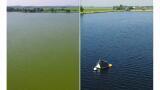
Excessive algae growth caused by elevated nitrate concentrations
Eutrophication is characterized by a high concentration of nitrates and phosphates in the water. These increased nutrient levels are often caused by industrial or even municipal discharge into a waterbody. Excessive concentrations of nitrates in lakes and reservoirs, can cause accelerated eutrophication and loss of dissolved oxygen. When there is too much nitrate in a water body, algae will grow faster than the ecosystem can handle. Since nitrogen is food for the algae, an excess level of nitrates can create conditions that make it difficult for aquatic insects or fish to survive. Furthermore, some algae species such as Microcystis, can produce chemical toxins that harm aquatic animals—and can potentially harm people if they drink water that has not been adequately treated.
Real-time nitrate measurements to detect pollution
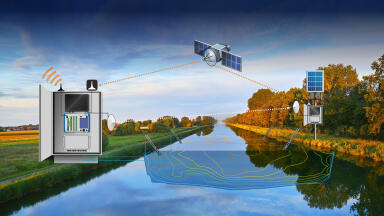
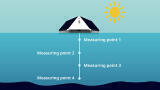
The NOз sensor is integrated in the water quality sensor package delivered with the MPC-Buoy, a solar-powered system for monitoring and controlling algal blooms. The water quality sensors measure essential algae indicators (Chlorophyll-a, Phycocyanin, and turbidity) and water quality parameters (Dissolved Oxygen (DO), Redox, pH, and Temperature) every 10 minutes to monitor and control algal blooms.
“By integrating a nitrate (NOз) sensor in our water quality sensor package, we can offer water companies a complete water management solution. Besides the fact that this information is useful for predicting algal blooms, excessive nitrate concentrations can also be an indicator of discharge in the lakes from surrounding industries’’ (Lisa Brand, CTO).
The measured data can be viewed in real-time via a web-based software called MPC-View. The MPC-Buoy system also provides an environmentally friendly solution to control algae growth. Based on the received water quality data, a specific ultrasonic program is activated. This makes it possible to reduce 70 to 90% of the algal bloom and to prevent new blooms. Currently, LG Sonic is running MPC-Buoy projects in more than 20 countries worldwide.
IET 36.5 Sept/Oct 2026


 Product directory




.jpg)