Water monitoring
Harmful algal blooms (HABs), especially those caused by cyanobacteria, are becoming more common due to climate change, eutrophication, and agricultural runoff. Their spread threatens biodiversity, public health, and water systems, while conventional treatment methods often do not provide long-term solutions.
Traditionally, blooms have been kept under control by using chemical algaecides, copper sulphate, or phosphate binders. However, these approaches provide only temporary relief and risk collateral damage to aquatic ecosystems. Many cyanobacteria species are highly adaptive, possessing gas vesicles that enable them to rise to the water surface for optimal sunlight exposure. Moreover, they may develop resistance to repeated chemical applications or static ultrasonic systems.
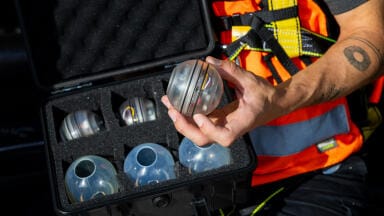
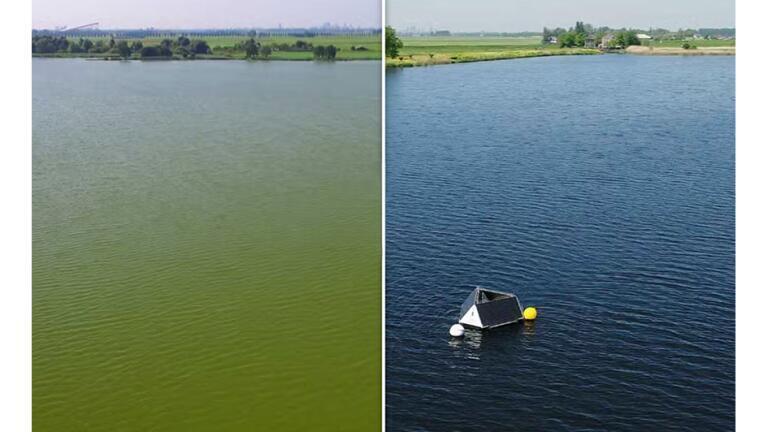
The MPC-Buoy by LG Sonic has been developed to deliver a more sustainable and responsive approach to this problem. Deployed in over 69 countries, the system combines real-time water quality monitoring, predictive modelling, and adaptive ultrasonic treatment, without the use of chemicals.
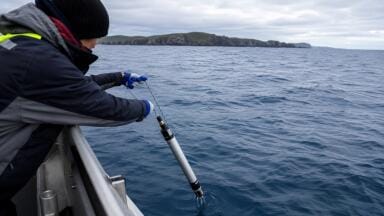
The buoy integrates in-situ sensors that continuously measure parameters including chlorophyll-a, phycocyanin, turbidity, pH, temperature, and dissolved oxygen. These data are transmitted to a cloud platform for real-time analysis, enabling early detection of conditions conducive to bloom formation.
LG Sonic’s predictive algorithms assess trends in algal dynamics and environmental variables, facilitating timely and informed intervention. If a bloom is likely to occur, the MPC-Buoy activates a tailored ultrasonic signal, targeting specific species and growth stages. This treatment disrupts algae’s buoyancy control mechanisms and limits photosynthesis, therefore preventing surface accumulation and bloom escalation.
At the heart of this system is its Interactive Algae Control (IAC) technology, which uses continuous feedback loops to modify ultrasonic output in real time. This ensures the system remains effective under different seasonal and chemical conditions while preserving aquatic biodiversity.
The MPC Buoy’s applications range from drinking water reservoirs in temperate regions to warm, tropical lakes. In multiple long-term deployments, algae concentrations have been reduced by up to 95%, highlighting the potential of smart, non-invasive technologies to mitigate one of freshwater management’s toughest challenges.
IET 36.5 Sept/Oct 2026


 Product directory




.jpg)