Water monitoring
A new paper using a fine-tuned large language model and topic modelling to analyse hydrology literature in China is not, in itself, a sensor story.
It is a research-mapping exercise. But what it maps is significant: a field growing in scale, becoming more collaborative, and shifting away from a narrower focus on water resources management towards climate change, ecological hydrology and carbon-related questions.
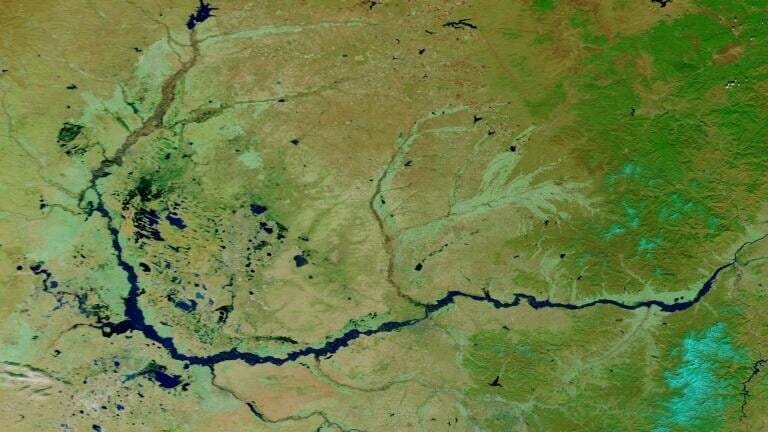
The study also finds that basin attention is concentrated in major systems such as the Yangtze and Yellow River, and that models such as SWAT, VIC and Xinanjiang dominate the analytical landscape.
For an instrumentation audience, that combination points less to a single breakthrough device than to a broader change in what future water monitoring systems will be expected to do.
VIC, one of the leading models identified in the paper, requires meteorological forcing data including precipitation, air temperature, wind speed, atmospheric pressure, vapour pressure and incoming shortwave and longwave radiation.
In other words, a research community leaning more heavily on basin models is also leaning more heavily on dependable inputs. Model-driven hydrology is still built on observation, and usually on more observation, not less.
For suppliers, that shifts the commercial conversation away from standalone measurements and towards whether a monitoring system can deliver the continuous, structured, quality-controlled data needed for calibration, validation and operational use.
The second implication is that the variable set is broadening. A discipline focused mainly on water allocation and conventional river-basin management can often get by with a fairly familiar mix of rainfall, water level, discharge and some water-quality data.
A discipline moving towards ecohydrology and climate response needs a more connected picture of basin behaviour.
Ecohydrological observation work points to the importance of tracking processes such as soil moisture, precipitation, evapotranspiration, runoff and vegetation across different scales and compartments while also stressing the need to integrate these observations with models, data services and decision-making systems. That is a different procurement logic.
It favours networks rather than isolated points, multiparameter strategies rather than single-variable compliance measurement, and systems designed to feed digital workflows rather than just produce readings.
That matters because the paper’s research trends do not exist in isolation. They line up with China’s wider push towards digitally managed basins. In 2023, official statements said the Ministry of Water Resources was already collecting real-time data from 53,000 precipitation stations and 25,000 hydrological stations, alongside satellites and weather radars, to support digital-twin river basin development.
That tells suppliers something important. The addressable need is not just more instruments in the abstract. It is instruments that can sit inside a much larger architecture of telemetry, modelling, forecasting and decision support. In a market moving towards digital twins, the sensor is only one part of the value proposition.
For hardware vendors, this suggests that conventional performance claims may no longer be enough on their own. Accuracy, robustness and low maintenance will still matter, but buyers may increasingly ask harder questions about integration.
Can the system deliver synchronised time-series data? Is the metadata clean? How easily can it feed basin models, cloud platforms or regional dashboards? Can it support remote diagnostics, unattended operation and communications in distributed watershed environments?
Those are not side issues in a digital-twin context. They are increasingly central to procurement. That conclusion is an inference from the research and policy direction rather than a direct claim in the paper but it is a well-grounded one.
The software angle may be even stronger. If Chinese hydrology is becoming more basin-scale, more climate-oriented and more dependent on coupled modelling, the demand for software is likely to shift from narrow analysis tools towards platforms that can ingest heterogeneous data, handle spatiotemporal layers, manage quality assurance and connect monitoring outputs with simulation and forecasting environments.
The paper itself highlights the centrality of models, while the ecohydrology literature emphasises integrated observations and model-linked decision making. Put those together and the likely winners are not just modelling packages, but middleware, data management platforms, visual analytics tools and software that helps turn field data into operational intelligence.
There is also a regional point here. Because the literature is concentrated in strategic basins such as the Yangtze and Yellow River, procurement pressure may not be evenly distributed. Demand is likely to be strongest where ecological sensitivity, economic importance and policy attention overlap.
That could favour suppliers able to position themselves around basin programmes rather than generic national demand. It may also reward vendors that can show relevance to flood forecasting, drought resilience, eco-restoration and climate adaptation, rather than talking only in terms of routine hydrometric replacement cycles.
The paper does not provide a procurement forecast but it does provide a map of where scientific and institutional attention is clustering. For suppliers, that map is useful.
So the real meaning of this story is not that AI has reviewed a lot of papers. It is that the review shows Chinese hydrology becoming more integrated, more computational and more ecologically oriented. When a field moves in that direction, procurement usually follows.
Monitoring systems have to cover more variables, feed more models, support more automation and fit more neatly into software-led workflows. For instrumentation and software providers, that means the pitch is changing. It is now about supplying the data foundations for digitally managed basins.
IET Guide 2026

 Product directory