Water pollution monitoring
The findings highlight how combined surface-water and groundwater monitoring can improve management strategies for nutrient pollution in complex catchments.
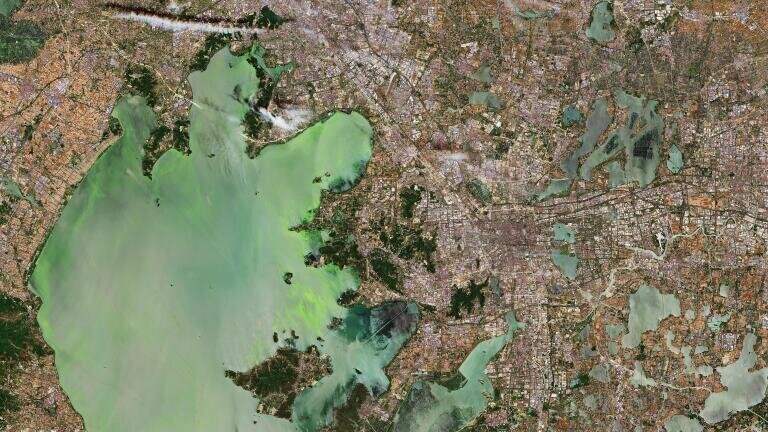
Taihu Lake sits within one of China’s most intensively farmed and aquaculture-dominated regions.
Fertiliser use, livestock production and fish farming have collectively driven significant increases in nitrogen loads across the basin.
Excess nitrogen, particularly nitrate (NO₃), can destabilise aquatic ecosystems, contribute to harmful algal blooms and pose risks to drinking water supplies.
While the lake’s nutrient pollution has been widely documented, identifying the precise sources and transport pathways has remained difficult because nitrogen moves through both surface water networks and groundwater systems.
A study led by researchers at Nanjing Normal University addresses this challenge by combining hydrochemical indicators with dual stable isotope analysis to track nitrogen across two representative river networks in the basin: the Lakeside River Network (LRN) and the Tai-ge Canal River Network (TGRN).
Surface water and groundwater samples were collected during dry, wet and normal flow seasons, allowing researchers to examine how nitrogen behaviour changes under different hydrological conditions.
The results show that nitrogen transport pathways vary significantly across the system. In the LRN, nitrification processes driven by agricultural activity dominated during the dry season, while denitrification was more pronounced in groundwater.
Across the study area, groundwater contained substantially higher concentrations of both total nitrogen and nitrate compared with surface waters, highlighting the importance of subsurface transport in delivering nutrients to the lake.
Source analysis identified manure as the dominant nitrogen contributor in agricultural areas, accounting for around 69% of nitrogen in surface water and 60% in groundwater.
In areas where aquaculture and agriculture overlap, aquaculture effluent was also identified as a major nitrogen source, particularly during the dry season when dilution is limited.
Isotopic analysis traced five primary nitrogen inputs across the basin: livestock manure, chemical fertilisers, aquaculture discharge, sewage and atmospheric deposition.
The researchers also applied a county-scale nitrogen cascade model to examine how land-use changes have altered nitrogen flows over time.
The analysis found that increasing livestock manure application, expansion of aquaculture operations and the growth of commercial crop production have significantly amplified nitrogen losses to aquatic systems.
In the Tai-ge Canal River Network, nitrogen discharge increased from 35.6 kg N per hectare to 137.3 kg N per hectare over the study period.
Another key observation was seasonal variation in nutrient ratios.
Higher nitrogen-to-phosphorus ratios during the dry season suggest conditions that may exacerbate nutrient imbalances in Taihu Lake, potentially influencing the dynamics of algal blooms and ecosystem productivity.
These findings underline the role of both surface water and groundwater as critical transport pathways for nitrogen entering the lake and demonstrate how seasonal hydrology can strongly influence nutrient behaviour.
For environmental monitoring professionals, the research highlights the value of combining isotopic tracing with conventional hydrochemical monitoring to identify pollution sources in complex agricultural watersheds.
The ability to distinguish between fertiliser, manure, aquaculture and wastewater inputs provides a more precise evidence base for designing mitigation strategies.
The findings also reinforce the need for integrated catchment-scale management approaches. Measures proposed by the researchers include improved manure management, optimisation of fertiliser application, hydrological flow controls to reduce nutrient transport, and the establishment of buffer zones capable of removing nitrogen before it reaches waterways.
More broadly, the study illustrates how multi-tracer monitoring frameworks can support more targeted water quality policies in regions where diffuse agricultural pollution dominates.
As nutrient pollution remains a major driver of eutrophication in lakes and reservoirs worldwide, monitoring strategies capable of resolving both sources and pathways are becoming increasingly important for effective water management.
IET Guide 2026


 Product directory






















.jpg)