Water pollution monitoring
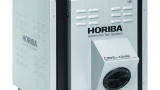
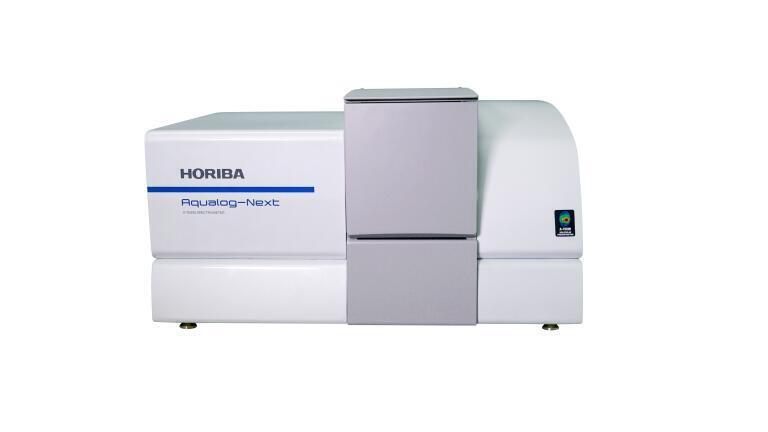
Water is under threat. From the invisible chemistry of byproducts to the explosive spread of harmful algal blooms and the persistent contamination of petroleum spills, water scientists face mounting pressure to detect, quantify, and respond faster than ever. The Aqualog®-Next A-TEEM Spectrometer— the 5th generation of HORIBA's gold-standard Aqualog® series — is purpose-built for exactly these challenges.
Aqualog®-Next combines HORIBA's patented A-TEEM™ technology — simultaneously measuring absorbance and fluorescence EEMs with real-time IFE correction — with the intuitive EzSpec™ software, delivering a fast, accurate, and streamlined workflow from data acquisition to reporting. The Aqualog®-Next enables water quality professionals to track natural organic matter (NOM) and algal-derived compounds — key precursors to disinfection byproducts (DBPs) and early warning signs of harmful algal blooms.
Disinfection Byproducts form when natural organic matter (NOM) reacts with chlorine and other disinfectants during water treatment. Identifying the precursor compounds — particularly coloured dissolved organic matter (CDOM) — is critical to reducing DBP formation before it becomes a public health issue. The Aqualog®-Next delivers precisely this capability. Using HORIBA's patented A-TEEM™ technology, the instrument simultaneously captures both absorbance and fluorescence excitation-emission matrices (EEMs) in seconds, generating complete spectral fingerprints of NOM fractions. Crucially, it calculates specific UV absorbance (SUVA) — a key regulatory indicator of DBP precursor potential — on the fly, giving water treatment professionals actionable intelligence at treatment plant speed.

Comparison of typical Aqualog®-Next EEMs (top) and UV-VIS absorbance spectra (bottom) for corresponding raw (left) and finished (right) water samples measured on the same day.
HABs are increasing in frequency and severity worldwide, driven by nutrient loading, warming temperatures, and shifting hydrology. Early detection of cyanotoxin-producing cyanobacteria and their associated organic signatures is essential for protecting drinking water supplies and recreational waterways. The Aqualog®-Next’s ultra-fast CCD detector captures full A-TEEM fingerprints in moments — not minutes — enabling high-throughput screening across large sample sets. Fluorescent proxies associated with algal-derived organic matter are clearly resolved, and EzSpec™ software's powerful 3D-to-2D profiling tools make pattern recognition and trend monitoring straightforward, even for large monitoring datasets.

Excitation emission matrices representing the sum of five individual sample measurements of each species used for the 2-way and 3-way model calibrations. (A) M. aeruginosa; (B) A. flos-aquae; (C) Mayamaea sp.; (D) Nitzschia sp.; (E) Selenastrum sp.
Petroleum hydrocarbons are strongly fluorescent, making fluorescence EEM spectroscopy one of the most sensitive and selective tools available for spill detection and remediation monitoring. The Aqualog®-Next's on-the-fly inner filter effect (IFE) correction — a persistent challenge with highly absorbing petroleum samples — ensures measurement accuracy even in heavily contaminated matrices. Combined with Rayleigh masking and RSU normalisation, researchers gain clean, reliable EEM data from complex environmental samples without time-consuming manual processing steps. Whether assessing initial spill extent or tracking natural attenuation over time, the Aqualog®-Next delivers the spectral resolution needed to characterise contamination with confidence.
IET 36.2 Mar/Apr 2026


 Product directory











.jpg)