Soil testing
By harnessing the millenia-old symbiosis of herd animals and grassland, a far more robust, inexpensive and beautiful form of massive carbon capture becomes possible.
In Kim Stanley Robinson’s cli-fi epic The Ministry for The Future, one of the solutions used to sequester carbon emissions is inspired by legendary naturalist E.O. Wilson’s Half-Earth concept—dedicating half of the planet to vast wildlife corridors, utilizing herd animal ecological dynamics.
Often, the dominant image of natural carbon sequestration is a vast forest canopy, but while reforestation is vital, it is not the most stable long-term carbon sink. Carbon stored in trees is vulnerable: wildfires release carbon as CO₂, and storms cause fallen trees to decompose, feeding microbes that respire carbon back into the atmosphere. To build resilient carbon sequestration systems, we must expand our focus to other ecosystems—such as grasslands sustained by herd animals.
The Role of Herd Animals in Grassland Ecosystems
Restoring and expanding grasslands means dedicating more land to herd animals like bison (North America), wildebeest and antelope (African savannas), reindeer and caribou (Arctic tundra), and elephants (Africa and parts of Asia). Trophic rewilding reestablishes the intricate food webs that sustain these ecosystems. Through grazing, trampling, and nutrient cycling, herd animals regenerate grasslands, making them powerful carbon sinks.
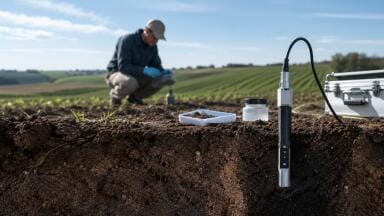
Unlike forests, where carbon is stored in above-ground biomass, grasslands primarily store carbon underground. Their deep-rooted perennial grasses sequester carbon in subsoil and humus, a highly stable form of organic matter that can last centuries or millennia. While tree roots also store carbon, they eventually decompose upon deforestation, releasing CO₂. Conversely, grasslands continuously build soil carbon through root growth and turnover, making them a more enduring carbon sink.
Grazing by herd animals facilitates long-term carbon storage in several ways:
Herd animals not only capture carbon but also create fire-resistant landscapes. By maintaining open grasslands and preventing the encroachment of flammable woody vegetation, they reduce the frequency and intensity of wildfires, which are becoming more common due to climate change.
For example:
Grasslands store carbon underground, making it more resilient to environmental disturbances than above-ground biomass in forests. Scientific studies estimate that the first 30 cm of soil globally contains around 680 billion tons of carbon—almost double the carbon present in the atmosphere. Over 60% of this soil carbon is concentrated in ten countries, emphasizing the need for protective land management to avoid releasing emissions.
Restoring and protecting key animal populations—such as marine fish, whales, gray wolves, wildebeest, and bison—could sequester an additional 6.4 billion tons of CO₂ annually, equivalent to the United States' yearly emissions. The largest-ever bison reintroduction project in Romania’s Țarcu Mountains is a key example of trophic rewilding in action, though its carbon sequestration impact is still being studied.
According to Our World in Data:
While grassland-related emissions appear low, their potential for carbon sequestration is massive. Restoring these ecosystems could remove up to 6.3 gigatons of CO₂ per year, significantly mitigating climate change.
To address climate change, trophic rewilding must be integrated into global carbon strategies. Policies should prioritize:
Kim Stanley Robinson’s vision in The Ministry for the Future—where humanity manages wildlife corridors for climate stabilization—is not just science fiction. With scientific backing, trophic rewilding presents an actionable, nature-based solution for carbon sequestration and ecosystem resilience in the face of a changing climate.
IET 36.5 Sept/Oct 2026



 Product directory