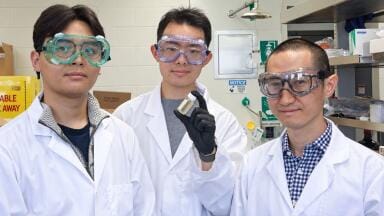
A commonly occurring bacterium could hold the key to improving the quality of soil affected by nuclear contamination.
Shewanella oneidensis has been pinpointed by scientists at Ohio State University as a possible means of cleaning up land damaged by nuclear weapon manufacturing.
The bacterium's respiratory system chemically breaks down metals to access oxygen. In the same way, it is thought that it could inhale toxic materials, removing their poisonous qualities on exhalation.
"If you could enhance this bacterium's ability to reduce uranium by having it make more of these key proteins, that could perhaps be one way to clean up these sites that are contaminated," said Brian Lower, assistant professor at the university's School of Environment and Natural Resources, in a study published in Applied and Environmental Microbiology.
Meanwhile, it was reported this month that poor
soil quality near Lincoln University in New Zealand has resulted in families being advised not to allow their children to play there.
The soil was found to contain three times the recommended level of lead, Stuff.co.nz reports.



 Product directory