Portable & field testing
Published over 12 years ago. See the latest and most current information on Portable & field testing.
In 1795, German chemist Heinrich Klaproth was so impressed by the properties of a newly discovered
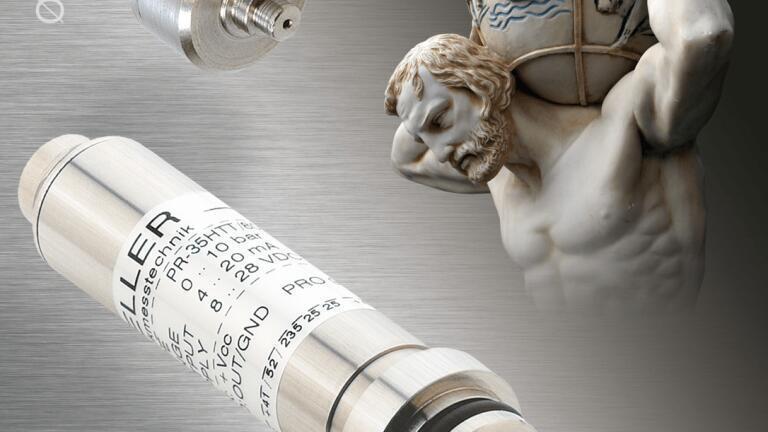
element that he named it titanium, after the Titans (a Greek race of deities). The best-known Titan is Atlas,
who was sentenced by Zeus to carry the world on his shoulders.
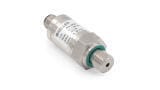
For some time now, Keller AG für Druckmesstechnik (Switzerland) has offered titanium versions of its products for use in heavily corrosive media. This metal has a host of advantages for applications under very special conditions.
Titanium is used as a replacement for steel in the aerospace industry, mainly for reasons of weight. In
the medical devices sector, the fact that titanium is chemically and biologically neutral is especially
important. This property is due to a permanent layer of oxide on the surface of the material. Thanks to its presence, components made of titanium will not corrode even in salt water or chlorinated water, unlike the high-grade steels that are normally used in the sector. This is why titanium is more frequently chosen for process measurement technology applications involving wastewater that may be contaminated with unknown corrosive substances. A titanium housing makes it possible to carry out hydrostatic level measurements effectively in brackish water, or even in iron chloride.
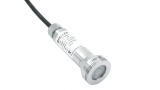
The development of an implantable sensor (Ø 9 mm) made of titanium has caused a sensation. If a sensor of this sort is made of steel, it can only be exposed to temperatures up to a maximum of 60 °C. At higher temperatures, the heat-induced expansion of the oil causes so much deformation of the steel diaphragm that it no longer returns to its original position. By contrast, the titanium diaphragm shows no deformation up to 120 °C, which also makes stability errors much less likely than in products with steel diaphragms. This is because the modulus of elasticity is only half as high. At Keller, titanium is increasingly used to manufacture high-quality transmitters that meet the most demanding stability requirements.
IET 36.5 Sept/Oct 2026





 Product directory