No Compromise GC-MS - Atmospheric Pressure GC (APGC)

Environmental laboratory

No Compromise GC-MS - Atmospheric Pressure GC (APGC)

12 Mar, 2014

Published over 12 years ago. See the latest and most current information on Environmental laboratory.

Ever-tightening environmental regulations have led to increased sensitivity requirements from commonly utilized analytical techniques such as GC-MS. Additionally, there is a need to reduce the injected volume of samples in order to minimize matrix effects and the contamination of instrumentation.

GC–MS is commonly applied for non-polar, volatile, and thermally stable compounds, and ionization in GC–MS normally occurs under vacuum conditions using either electron ionization (EI) or chemical ionization (CI). APGC is a technique that operates at atmospheric pressure and uses a soft ionization process which can provide abundant molecular ions that in most cases can be used as precursor ions in MRM experiments for multi-residue GC-MS/MS analysis.

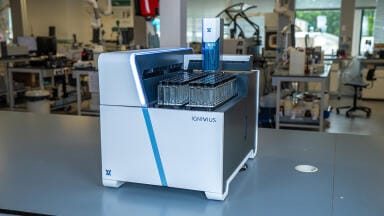
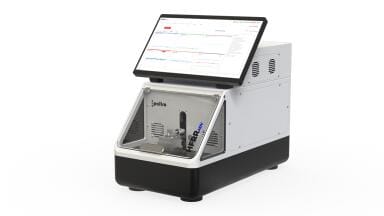
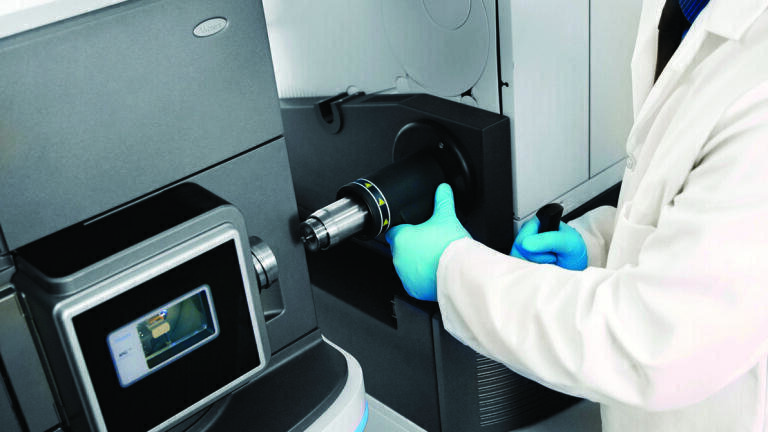
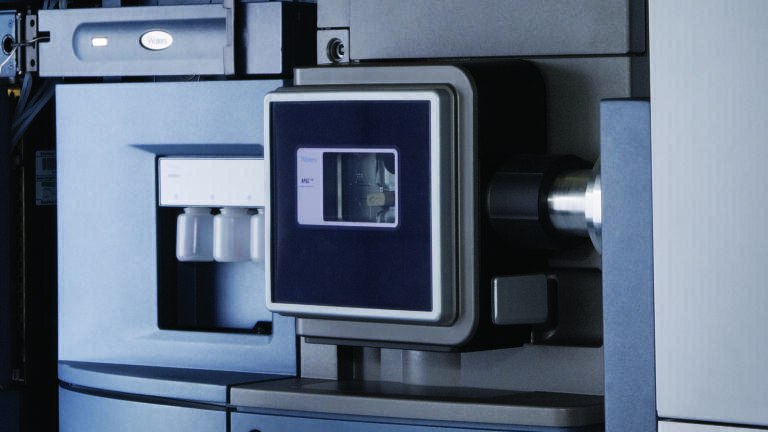
APGC is an ionization source for Waters' Xevo and SYNAPT mass spectrometers that provides access to ultra-trace quantification, comprehensive qualitative MS & MS/MS, and high-resolution, ion-mobility separations.

Key features/benefits:

  • Lower levels of fragmentation compared with traditional EI: Coupled with Waters' Xevo TQ MS or Xevo TQ-S, APGC enables low-level quantification of persistent organic pollutants that have proved challenging to analyse using traditional EI+ GC-MS systems.
  • Analyse both GC and LC compounds on a single MS platform: Whether you need to reach ultra-trace levels in complex samples, or perform a complete LC and GC screen to get the maximum information from your sample, changeover from LC to GC is fast and easy, and since APGC is not a vacuum technique, equilibration time between modes of operation is kept to a minimum.
  • Achieve ultra-trace detection levels using APGC and Xevo TQ tandem quadrupole MS, This allows compliance with regulatory limits and the ability to inject less sample matrix.   
  • High-resolution, ion mobility separations with APGC and SYNAPT G2-Si allow you to use the collision cross section (CCS) of a molecule to provide significant enhancements in sensitivity, separation, specificity and structural insight.
    Application areas include the detection of multi-residue pesticides, dioxins, furans, and PCBs.
  • In this technology brief, a novel technique is presented for low-level quantification of challenging persistent organic pollutants (POPs) using Atmospheric Pressure GC (APGC), coupled with the Xevo TQ MS or Xevo TQ-S.

For more information on how APGC is , see the video, or download the white paper.

Latest News

IET 36.3 May

Explore our Digital Edition

Discover the latest news and research

Digital edition

Explore Our Other Sites

Labmate Online
Cytokine-armoured CAR T therapy shows promise against aggressive glioblastoma
Explore more Arrow
Pollution Solutions Online
Membracon delivers advanced olive oil wastewater treatment and water reuse solution in Spain
Explore more Arrow
Petro Online
Safer, faster on-site density checks for aviation fuel
Explore more Arrow
Chromatography Today
Affordable liquid chromatography solvent delivery pump
Explore more Arrow