PFAS analysis
Published over 9 years ago. See the latest and most current information on PFAS analysis.
In this just released application note, we summarise a comprehensive study completed by van Bavel, et al. that demonstrates the capabilities of Waters' Atmospheric Pressure Gas Chromatography (APGC), coupled with Xevo TQ-S for the determination of dioxins in a variety of complex sample matrices. The performance of APGC was compared to samples previously characterised by GC-HRMS. Finally, system robustness was investigated by an inter-laboratory comparison trial using four different Xevo TQ-S systems with APGC.
Testing has been traditionally performed by GC-EI-HRMS. However, recent technological advances have allowed for a revision of the analytical criteria. Following extensive review, the European Commission has enacted Regulation EU 589/2014, which permits the use of GC-MS/MS for the confirmatory analysis of dioxins in food and feed.
The authors conclude that the use of APGC in combination with the Xevo TQ-S for the analysis of dioxins has the same potential, in terms of sensitivity and selectivity, as the traditional HRMS instrumentation, and that it is compliant with EU Regulation 589/2014/EU. The APGC-MS/MS benchtop system, however, is far easier to use, maintain, and it can be quickly converted for liquid chromatography analysis.
Download application note (PDF)
Determination of AFFF Components Using a Multivariate Analysis Approach Following LC-QTof MS Acquisition
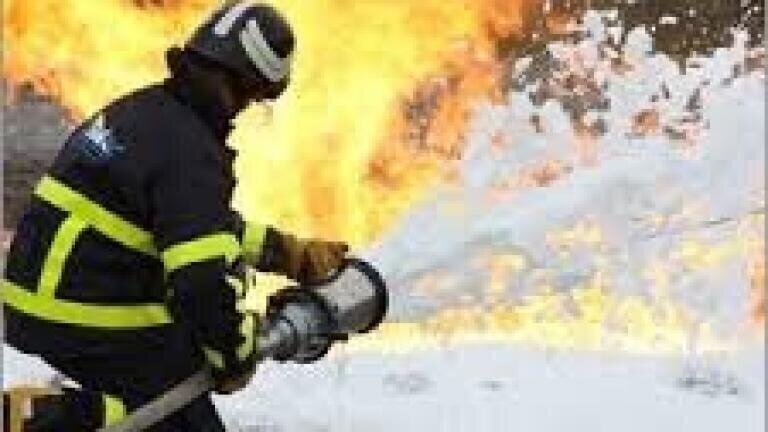
Aqueous film-forming foams (AFFFs) have been implemented in both military and commercial fire-fighting activities to extinguish flammable liquid fuels. However, uses of these formulations have resulted inadvertently in the release of contaminants into the environment due to migration from the site of application. The various formulations of AFFFs consist of numerous fluorocarbon and hydrocarbon compounds. Characterising the unique as well as common components of AFFFs that are currently implemented is the starting point to tracking these constituents through various environmental and biological compartments. In this work, seven AFFF mixtures were analysed using QTof MS in order to obtain full spectral acquisition from which a multivariate analysis approach could be taken to identify unique components within the mixtures. This work was presented at 35th International Symposium on Halogenated Persistent Organic Pollutants.
Environmental Application Notes Booklet
In these application notes, learn how Waters latest technologies are being applied to the analysis of dioxins, perfluoroalkyl and polyfluoroalkyl substances (PFAS’s), Polycyclic aromatic hydrocarbons (PAHs), pharmaceuticals and personal care products (PPCPs), pesticides, veterinary drugs, and more.
IET Guide 2026

 Product directory