
Environmental laboratory
Published over 5 years ago. See the latest and most current information on Environmental laboratory.
US EPA 3546 is a Microwave-Assisted Solvent Extraction (MASE) procedure for extracting water insoluble or slightly water soluble organic compounds such as organochlorine pesticides, semivolatile organics, PAHs, PCBs, phenoxyacid herbicides, phenols, dioxins, and furans from soils, clays, sediments, sludges, and solid waste. This method was formally included in SW846 in 2008 and most of these compounds have been identified by the US EPA as priority pollutants.
MASE results in a rapid sample preparation technique that enables extractions with reduced amounts of solvents while working at higher temperatures and pressures. The process consists in a partitioning of the compounds of interest from the sample matrix into the solvent within a closed vessel. This accelerates the extraction process, yielding results equivalent to the standard Soxhlet method, but in a fraction of the time and using significantly less solvent.
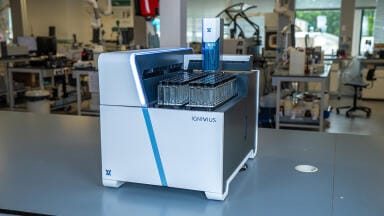
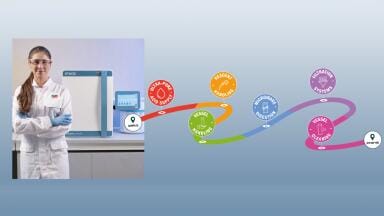
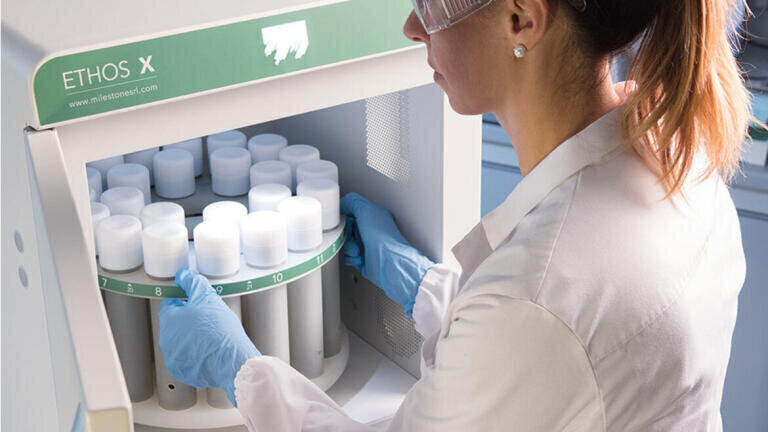
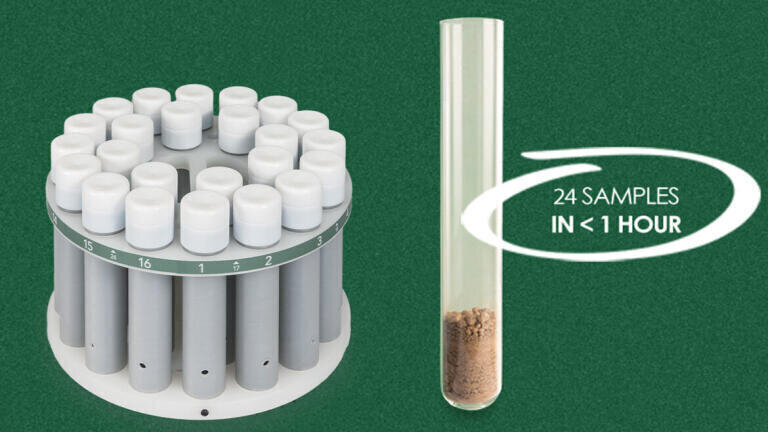
Milestone’s new ETHOS X benchtop microwave extraction system offers the ability to extract up to 24 samples simultaneously in only 40 minutes. With the new fastEX 24 rotor, ETHOS X is fully compliant with US EPA 3546 (100-115 °C and 50-150 psi). In addition, disposable glass vials can accommodate sample up to 30 grams of sample if needed, thereby improving the limit of quantitation (LOQ) for analysis. This exceeds by far both the throughput and sample size capabilities of all the other automated techniques, such as pressurised fluid extraction. MASE also uses far less solvent than conventional Soxhlet extractions. This combination of performance and reduced solvent usage provides for the lowest cost per test of any technique available. Today, is possible to process up to 30g of sample thanks to the introduction by Milestone of the largest ever 145 mL weflon vessel in combination with the largest ever 100 mL disposable glass vials that fits inside the new fastEX 24 vessel. This vial improves productivity by providing inexpensive, disposable glass tubes that eliminate the need to clean vessels between batches.
The synergy between the weflon construction and the contact less temperature control in all positions ensure a perfect temperature uniformity and make fastEX24 a unique and innovative solution for the extraction of contaminants from soils, providing unmatched ease of use and low running costs.
Determination of polycyclic aromatic hydrocarbons (PAH) from both standard reference materials and spiked materials with ETHOS X and fastEX-24.
READ THE APPLICATION NOTE – EXTRACTION OF PAH
Determination of polychlorinated biphenyls (PCBs) from both standard reference materials and spiked materials with ETHOS X and fastEX-24.
READ THE APPLICATION NOTE – EXTRACTION OF PCBs
Determination of pesticides from environmental matrices with ETHOS X and fastEX-24.
IET 36.5 Sept/Oct 2026


 Product directory