Environmental laboratory
Mercury continues to be a central focus in environmental research due to its well-known toxicity and persistence in ecosystems. For many academic laboratories, traditional mercury determination techniques remain a bottleneck because they are time consuming, require chemical digestion, and limit the number of samples that can be processed in a teaching or research setting.
Inductively coupled plasma techniques, such as ICP-MS and ICP-OES, are adequate for the simultaneous detection of several heavy metals and mass spectrometry (MS) detection can provide excellent sensitivity. Cold Vapor Atomic Absorption Spectrometry (CV-AAS) is also commonly used for mercury analysis and can provide good sensitivity over a wide detection range. However, one of the more significant drawbacks in heavy metals analysis, particularly for mercury, is the extensive sample cleanup required. ICP-MS/OES and CV-AAS or CV-AFS require solid samples to be digested prior to analysis and CV also requires a wet chemistry reduction to release mercury prior the detection.
Since the digestion step is laborious and time-consuming, it isn’t easy to undertake in a traditional teaching environment.
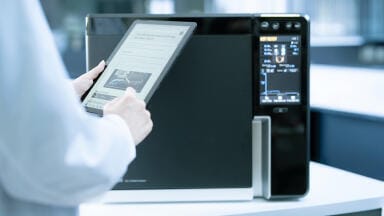
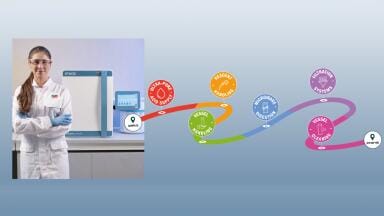
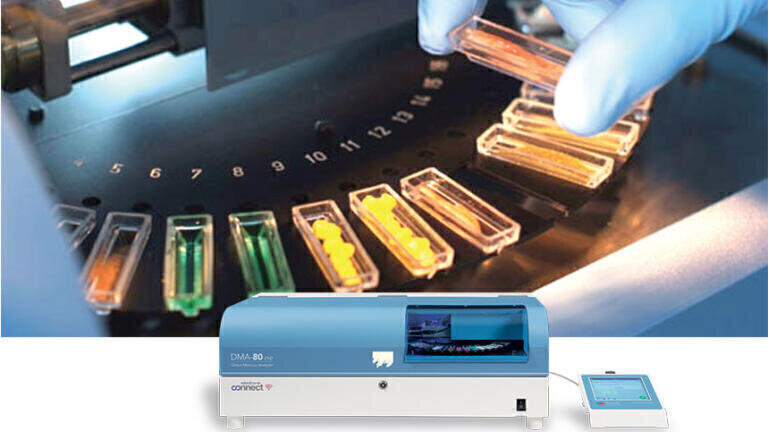
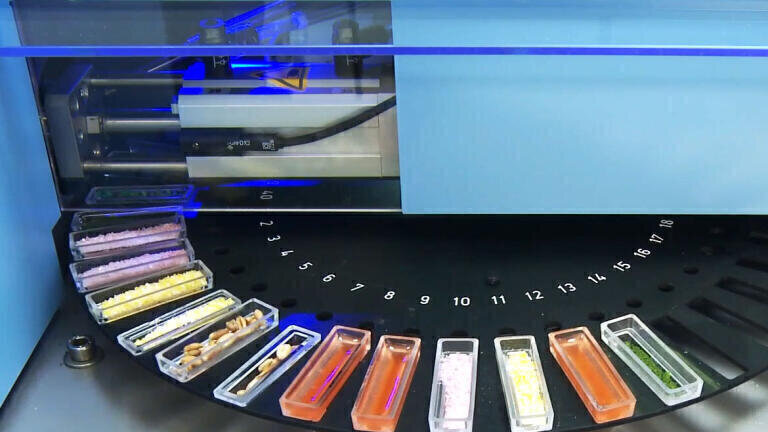
Direct Mercury Analysis (DMA-80) by Milestone offers the most valid alternative, enabling academic labs to conduct fast, accurate mercury determinations without any sample preparation in solid, liquid, and gaseous matrices. Milestone’s latest system, the DMA-80 evo, is specifically engineered to support both advanced research and high-throughput academic teaching labs. By eliminating digestion and wet chemistry steps, the DMA-80 evo delivers results in less than six minutes per sample, dramatically improving productivity while ensuring data quality.
The technique is based on these four steps: thermal decomposition, catalytic conversion, gold amalgamation, and atomic absorption detection to convert all mercury species to elemental mercury and quantify them with high sensitivity. The system’s double-beam detection technology ensures excellent stability and precision, while the use of air or oxygen as a carrier gas minimizes operational costs. A single liquid standard is sufficient for calibration across all matrices, simplifying workflows and ensuring long-term reproducibility.
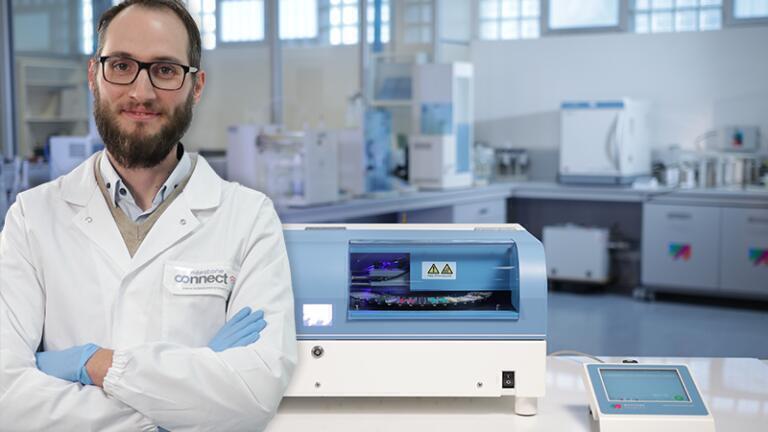
Considering ease of use, safety and performance, the DMA-80 evo is a optimal solution to colleges and universities looking to enhance their research and teaching capabilities whilst ensuring high level of safety for the students.
Universities across the globe have successfully implemented Direct Mercury Analysis into their research and teaching activities. At Georgia Southern University, thousands of undergraduate students have gained hands-on experience in mercury determination through the analysis of fish, water, and sediment samples. The speed and ease of the DMA-80 evo allows faculty to integrate real-world sample testing into laboratory courses, enhancing student engagement and scientific understanding.
Having published more than 12 research articles involving direct mercury analysis, the Department of Agriculture and Environmental Sciences at Lincoln University acquired a new Milestone DMA-80 evo in 2019 to replace an earlier version of the system that had reliably been in use for 16 years. Purchasing a new instrument was an easy decision based on the many years of instrument reliability, service, and application support provided by Milestone. The new system will address the needs of future research and be utilized as an important teaching tool for students taking the courses Advanced Analytical Methods, Chemical Instrumentations, and Environmental Sampling and Analysis.
The Department of Chemistry at Vassar College was motivated to look for a new analytical technique for mercury determination by the increased interest from faculty and students in performing environmental analyses on soils and peat. Although it had an ICP-MS instrument for metals analysis, a dedicated mercury analysis solution was needed to achieve the department's research goals and throughput needs. The DMA-80 evo Direct Mercury Analyzer has allowed students to perform mercury analysis in diverse matrices, including fish and canned products. It has also enabled collaboration between research groups in the Department of Chemistry to support environmental research on soils.
By removing the barriers associated with traditional mercury analysis techniques, such as the use of chemicals and the sample preparation steps, Direct Mercury Analysis empowers faculty, researchers, and students to achieve high-quality results with minimal preparation time and virtually no running costs. As demonstrated across multiple institutions, the DMA-80 evo is a powerful tool for expanding academic research capabilities and enhancing scientific education.
IET Guide 2026

 Product directory