Environmental laboratory
Published over 16 years ago. See the latest and most current information on Environmental laboratory.
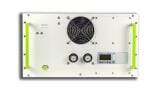
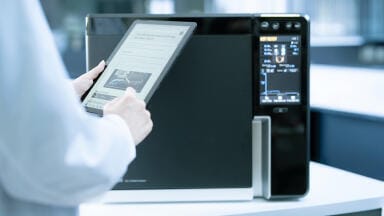
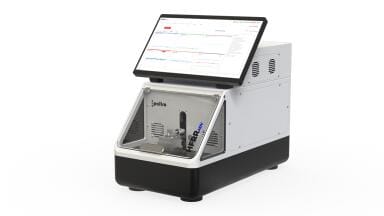
Milestone’s (Italy) DMA-80 is a direct mercury analyser which uses the principle of thermal decomposition, amalgamation and atomic absorption. The DMA-80 can analyse both solid and liquid matrices with equal precision. Analysis takes only 5 minutes per sample and does not require any sample preparation. All mercury is released from the sample through thermal decomposition. This eliminates the need for any sample
preparation and, subsequently, purchasing, handling and disposing of hazardous chemicals. Because no sample preparation is required, the typical bottleneck in the analytical laboratory is eliminated. Therefore, analysis is reduced to only 5 minutes per sample, and at a fraction of the cost typically associated with traditional mercury techniques, such as CV-AAS, ICP-AES or ICP-MS. Due to their high reactivity, the analysis of samples such
as naphtha, lubricant oil and crude oil can be problematic. The DMA-80’s software allows the operator to create an appropriate temperature profile to ensure smooth sample analysis.
Typical applications that the DMA-80 is used for include environmental, geochemical, petrochemical, food and feed, clinical and polymer samples. Milestone’s Tri-Cell DMA-80 combines an innovative mercury measuring system with a unique optical path spectrophotometer, achieving a detection limit of 0,0015 ng of mercury.
All you need to do is weigh your sample, load it onto the built-in auto-sampler and press ‘start’. The DMA-80 is so simple to use that it can also be operated in the field, not only in the analytical laboratory.
The DMA-80 is fully compliant with US EPA method 7473 and with ASTM method D-6722-01.
The DMA-80 produces quality results regardless of the sample matrix. The instrument can be calibrated using aqueous
standards and then be used in the analysis of organic and inorganic solid samples. In most cases, one method can be used to analyze a variety of different matrices making the DMA-80 extremely easy to use: for example, a 10 ng acqueous mercury standard NIST 2709 Soil and NIST 1632c generate similar absorbance peaks.
A sample is weighed into a quartz or metal boat, and the sample weight is transferred from the analytical balance to the DMA-80. Sample boats are loaded onto the instrument auto-sampler.
Samples are first dried and then thermally decomposed in a oxygen-rich furnace. Mercury and other combustion products are released from the sample and they are carried to the catalyst section of the furnace, where nitrogen and sulfur oxides, as well as halogens and other interfering compounds, are eliminated. Mercury is selectively trapped, in a separate furnace, through gold amalgamation. Combustion by-products are flushed off. The amalgamation furnace is heated and mercury is rapidly released. Mercury is flown via the carrier gas into a unique block with a dual-cell or tri-cell arrangement, positioned along the optical path of the spectrophotometer, where it is quantitatively measured by atomic absorption at 253,65 nm.
IET 36.5 Sept/Oct 2026





 Product directory