Environmental laboratory
Published over 16 years ago. See the latest and most current information on Environmental laboratory.
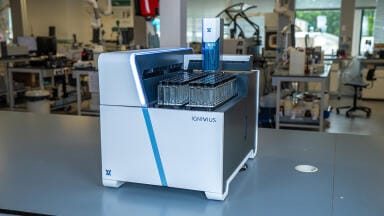
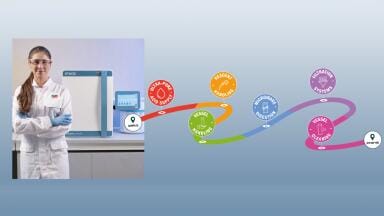
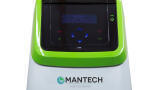
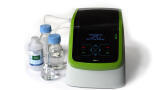
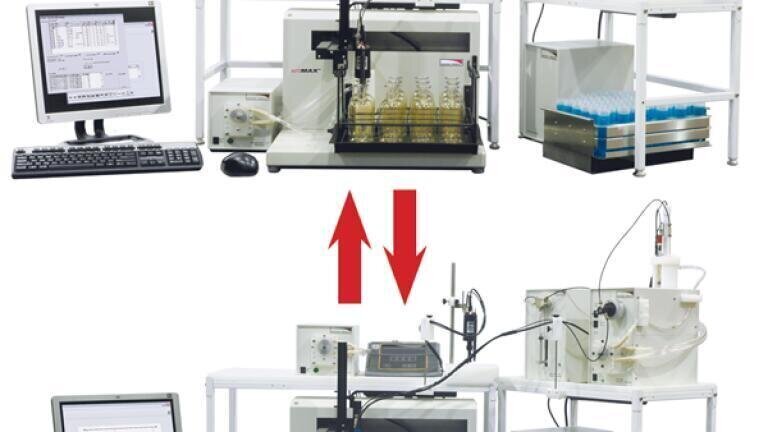
The PC-BOD/Titrate Duo from Man-Tech (Canada) enables laboratories to prepare and analyze samples for BOD5 then, with a simple change of a rack and probe holder, analyze different samples for pH, conductivity, alkalinity, turbidity and more! BOD by Day, Titrate by Night. With the PC-BOD/Titrate Duo, Man-Tech delivers BOD and Titration in one, a quick return on investment, and rock solid technology. The PC-BOD/Titrate Duo follows 21st edition of Standard Methods, US EPA, and ISO Approved Methods. The PC-BOD/Titrate Duo with AutoMax73 or AutoMax122 is a durable, reliable system, which takes up less bench space than two separate systems. It delivers rapidly generated results that are accurate, precise and that will stand the test of time.
The PC-BOD Titrate Duo offers the DUO platform, making it simple and easy to switch between configurations. It has a common, dynamic rinse station for both platforms, innovative autorun buttons which simplify operation and training, automated import and export from/to LIMS, as well as the capability to allow the operator to easily add more samples to the batch while running. The PC-BOD offers automated addition of dilution water, seed and inhibitor, as well as automated rinsing, and a standard YSI probe. It allows quick and easy sample set creation, pre-defined sample sets including blanks, seeds and GGA’s, the capability to analyze BOD and CBOD samples in the same batch and automation of 5 and 7-Day BOD analysis methods. The TitraSip™ Multi-parameter System allows automated pipetting, autodilution capabilities for high concentration samples as well as analysis of pH, conductivity, and alkalinity, all from a single sample. It also offers pH/conductivity/alkalinity in 3 minutes or less per sample and a 48,000 step buret drive to ensure accurate, precise titration results. The IntelliRinse™ system ensures system and probes are clean before moving to the next sample.
IET 36.5 Sept/Oct 2026



 Product directory