_(4427399123)-(2).jpg)
Environmental laboratory
Will citizen-led monitoring programmes have to fill the increasing void left by central governments?
By Jed Thomas
As political support for environmental regulation wanes across the US, UK, and EU, the structure of environmental oversight is shifting in ways that could have long-term consequences for the monitoring sector.
From air quality to water protection, many national governments are pulling back—not just from enforcement, but from basic environmental data collection.
That retreat is creating new space for citizen-led initiatives, reshaping the landscape for monitoring technologies and raising questions about the future role of non-governmental actors in pollution control.
In the US, cuts to federal environmental agencies have become a recurring feature of Republican-led administrations.
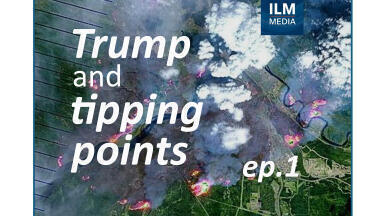
Now, in the run-up to the 2024 election, the trend is accelerating. President Trump has proposed cutting the Environmental Protection Agency’s budget—or staff—by 65%, according to recent clarifications from the White House.
Meanwhile, the EPA under new leadership is reviewing the legal underpinnings of greenhouse gas regulation, including the 2009 Endangerment Finding.
More quietly, the US State Department has shut down its global air quality monitoring network, which had operated low-cost air quality sensors at 80 embassies and consulates worldwide.
The program was widely seen as a source of transparent, reliable data—particularly in countries where local monitoring was weak or compromised.
Its removal represents a significant loss for global researchers, policy makers, and vulnerable communities.
Legal changes are also eroding the federal government’s ability to act.
Recent US Supreme Court rulings have weakened clean water protections (Sackett v. EPA, 2023) and blocked federal efforts to reduce cross-state air pollution from nitrogen oxide (Ohio v. EPA, 2023).
These rulings suggest that even a future administration with different priorities would face legal constraints in re-establishing national standards.
What’s happening in the US is part of a wider trend.
he European Union’s recent Omnibus Simplification Package has significantly scaled back the number of companies required to report on environmental and sustainability performance under the CSRD (Corporate Sustainability Reporting Directive).
Supply chain due diligence rules have been loosened, and sustainability-related disclosure requirements delayed by several years.
In the UK, there is growing uncertainty about the long-term role of the Environment Agency in enforcing air and water quality standards.
Labour’s proposed planning reforms include reduced environmental assessments for developers, with ministers framing conservation requirements as a barrier to growth.
While it’s still unclear how far these changes will go, recent signals suggest environmental permitting and oversight could be streamlined in ways that reduce demand for state-run monitoring.
Across these regions, public monitoring infrastructure is weakening, either by design or due to budgetary attrition. This creates obvious risks—but also opens the door for other actors to step in.
Citizen monitoring of air and water quality is not new, but it is gaining relevance.
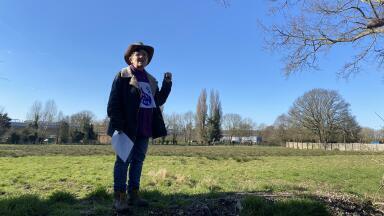
In the absence of reliable government data—or when agencies lose the resources to enforce their own standards—individuals, schools, NGOs, and community groups have increasingly taken matters into their own hands.
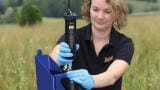
From tracking PM2.5 levels outside schools in polluted cities, to testing nitrate concentrations in agricultural runoff, grassroots groups are adopting environmental sensors as practical tools for local advocacy and public health protection.
This shift is not just a stopgap—it reflects a structural reallocation of responsibility. As formal oversight shrinks, informal systems expand to compensate. For the environmental monitoring sector, this raises important questions:
How should technologies be adapted for non-professional users?
Can affordable, portable, and easy-to-deploy sensors maintain the accuracy and reliability required for meaningful advocacy or scientific use?
Are there opportunities to build hybrid systems, where community data is integrated into national frameworks?
In some cases, community-generated data is being used to challenge official figures, flag pollution incidents, or even trigger investigations.
But it’s not always straightforward. Questions around calibration, QA/QC, data ownership, and legal admissibility remain complex.
What more citizen science means for the monitoring sector
For companies developing and selling monitoring instruments—especially portable, lower-cost, and web-connected options—these changes suggest a diversifying market.
While regulatory demand may soften in some regions, demand from non-state users could increase.
Smaller organizations and individuals are becoming buyers. NGOs, schools, citizen groups, and municipalities are sourcing their own monitors to fill data gaps.
This means rising interest in devices that are both affordable and easy to use, with minimal setup or training required.
Third-party verification and transparency are gaining importance. As public trust in regulatory agencies declines, tools that can demonstrate data provenance and tamper-resistance are likely to be favoured.
Open data platforms and connectivity features are now essential. Many citizen science projects prioritize platforms that allow users to log, share, and compare results across locations and over time.
Education and partnerships are becoming sales channels. Companies offering training, technical support, or collaboration with universities and NGOs may find new inroads into the growing "monitoring-from-below" movement.
While national governments may be stepping back from monitoring and enforcement, the demand for environmental data isn’t going away—it’s simply shifting.
In many places, the legitimacy of environmental decision-making will increasingly depend on data collected outside the state.
For the monitoring sector, this shift represents both a business opportunity and a technical challenge: how to equip a broader, more diverse base of users without compromising on accuracy or robustness.
If the 2020s are indeed a decade of deregulation, the future of environmental protection may rely less on the traditional regulatory state—and more on the networks of sensors, data tools, and citizen scientists stepping up to fill the gap.
IET Guide 2026

 Product directory














.jpg)