Environmental laboratory
Published over 14 years ago. See the latest and most current information on Environmental laboratory.
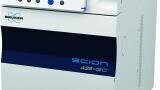
The triple quadrupole mass spectrometer (TQ MS) from Bruker (USA) is rapidly becoming the instrument of choice for compound analysis in complex matrices because of its selectivity in multiple reaction monitoring (MRM) mode and the ability to simultaneously monitor multiple target compounds, even when their retention time windows are significantly overlapped.
A significant problem linked to shorter scan times for multiple MRMs is that of “cross-talk” and overall decrease in sensitivity. Where there are two MRMs with the same m/z fragment ions from different precursor ions and with short scan time, the collision cell (Q2) does not have enough time to clear the fragment ion (scan event) from the first MRM before a second MRM fragmentation takes place. The result is the product ion from the first MRM appears in the second MRM chromatogram as a “ghost peak” or artifact and thus confuse the chromatogram of the next transition. Cross-talk can be particularly problematic if the first MRM is of high intensity, as it can lead to increasingly plausible false positives on the subsequent MRM.
IET 36.5 Sept/Oct 2026





 Product directory