Environmental laboratory
Published over 13 years ago. See the latest and most current information on Environmental laboratory.
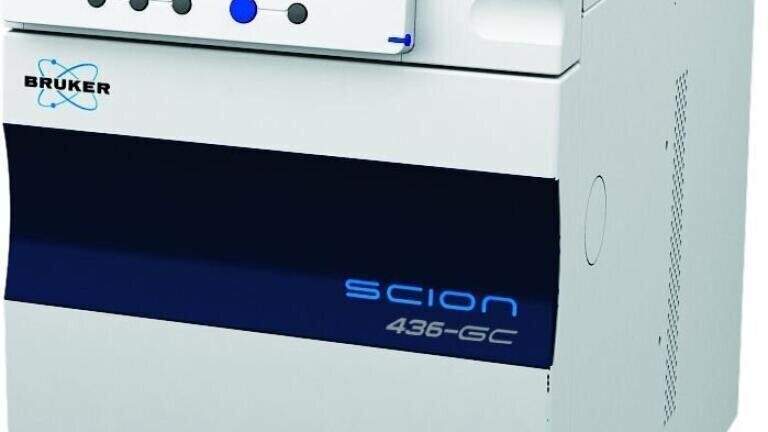
Recently at the Pittsburgh Conference 2013, Bruker (USA) announced their new configurations for the SCION 436 and SCION 456 gas chromatographs supporting the use of hydrogen carrier gas. The continued instability in supply and rising cost of helium has renewed interest and use of hydrogen as the carrier gas for capillary GC applications. Bruker has answered the concerns and calls for help from its customer base to deal with this disruption and significant increase in cost, by delivering GC systems capable of utilising hydrogen safely with no impact on data quality or system robustness.
“While using hydrogen as a carrier gas is not new to gas chromatographers, the safer choice of helium has prevailed,” commented Hans van den Heuvel, GC Product Manager. “However, as we saw the supply problem intensifying and cost for helium rising, we knew we needed to step in and provide a safe, reliable, and easy alternative for our customers. Today we launch SCION GC packages that fully support hydrogen as a carrier gas”.
Hydrogen has been used as an alternative to helium, where users are looking for the benefit of increased column flow and reduced analysis time – without a reduction in separation efficiency. This is clearly another driving factor in users’ desire to switch from helium to hydrogen. “Our customers are looking at hydrogen carrier again as they see benefits from reduced analysis time and now lower operating costs. In some regions customers are reporting helium prices increasing as much as 200 percent, while supply reliability decreases substantially” noted Meredith Conoley, Marketing Director for Bruker CAM.
The SCION GC systems have been certified for use with hydrogen carrier by a third-party certification agency. Special firmware, software and hydrogen sensors allow laboratories to confidently operate these systems with hydrogen carrier gas.
IET 36.5 Sept/Oct 2026





 Product directory