Environmental laboratory
Published over 13 years ago. See the latest and most current information on Environmental laboratory.
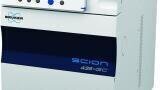
Published in the October/November edition of International Labmate, an article from Bruker’s CAM division, ‘Screening Sediment for Pyrethroid Insecticides Using GC-MS/MS’ by Bruker expert Ed George, is now available for download http://bit.ly/BCA405. The article examines how excellent sensitivity and low limits of detection (LOD) are offered by the SCION triple quadrupole (TQ) through its use of electron impact ionization (EI), tandem MS/MS and temperature vaporization injection (PTV), making it the ideal choice for the analysis of sub ppb concentrations in complex matrices.
Pyrethroids are chemically adapted from pyrethrins, which are naturally produced by chrysanthemums. Pyrethroids have been synthesized to increase their stability in sunlight. Although their use in insecticides is vital to increase food and cotton crop production as well as for mosquito control, pyrethroids are highly toxic to aquatic organisms which enter the water supply from agricultural run off. With regulatory agencies, such as the Environmental Protection Agency (EPA), developing evermore stringent regulations on levels of allowable chemicals in the environment, it is important that laboratories have highly capable instrumentation such as Bruker’s SCION TQ to meet these requirements. GC-MS/MS provides the necessary high-speed scanning in full scan mode to complete assays faster, with greater accuracy and higher sensitivity in the identification and quantitation of more compounds than previously possible. Alongside EI, tandem MS/MS and PTV, Compound-Based Scanning (CBS) software sets the SCION apart facilitating easy set-up of multiple reaction monitoring (MRM). By optimizing scan time and duty cycle, referencing a built-in library of over 2,500 MRM transitions and 900 contaminants, automatic creation and population of the data handling table the operator is free to carry out other tasks.
“It’s great to see that the awareness and utility of GC-MS/MS are growing and the application of its uses in analytical laboratories all over the world to tackle current issues,” commented Meredith Conoley, Director of Marketing, Bruker CAM division. “Our double award winning SCION TQ’s increased levels of sensitivity and lower limits of detection with its additional design features that provide reduced signal-to-noise ratio and zero cross-talk. The SCIONs easily fit into any environmental, toxicology, food or water lab for routine pesticide analysis”.
AET 30.4 Nov 2026


 Product directory