Air sensors
Hydrogen is set to play a key role in the global energy transition. But for hydrogen technologies to be deployed safely and at scale, reliable sensors are essential—particularly to detect leaks and prevent the formation of highly flammable oxyhydrogen gas when hydrogen mixes with air. A major challenge has been that most existing hydrogen sensors perform poorly in humid conditions, even though hydrogen is almost always found where moisture is present.
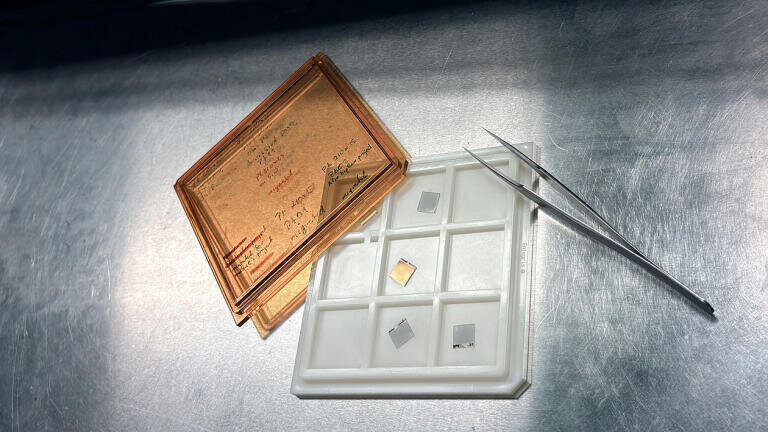
Now, researchers at Chalmers University of Technology in Sweden have developed a compact hydrogen sensor that not only tolerates humidity but becomes more effective as moisture levels rise. The sensor is small enough to fit on a fingertip, can be manufactured at scale, and is designed for the real-world environments where hydrogen is produced, stored, and used.
“Humidity is one of the most important factors affecting hydrogen sensor performance,” says Athanasios Theodoridis, a doctoral student at Chalmers and lead author of the study published in ACS Sensors. “Many sensors become slower or less reliable when humidity increases. What surprised us was discovering that our sensor responds more strongly to hydrogen the higher the humidity is. It took time to fully understand why.”
Hydrogen is increasingly used as an energy carrier in transport, a raw material in the chemical industry, and a key component in green steel production. Water vapour is ever-present in ambient air and is also produced when hydrogen reacts with oxygen, such as in fuel cells used in vehicles and ships. Fuel cells themselves require water to prevent internal membranes from drying out. As a result, hydrogen systems almost always operate in moist environments.
Production and storage facilities face similar conditions, with humidity fluctuating due to temperature and weather. To ensure safety and prevent leaks from turning into fire hazards, sensors must function reliably regardless of moisture levels.
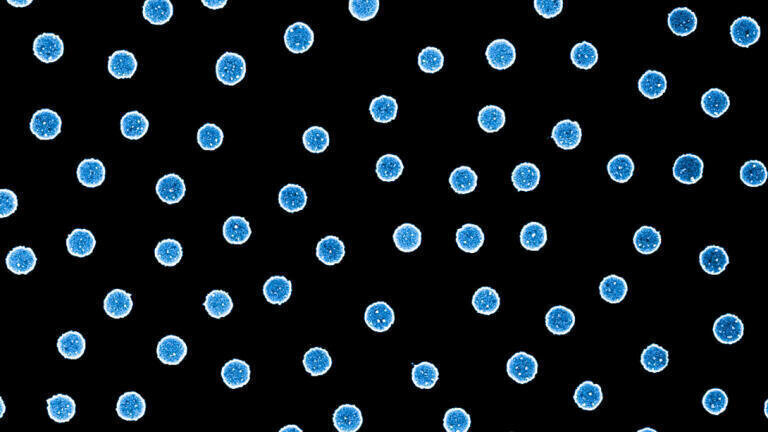
The new sensor developed at Chalmers uses nanoparticles of platinum that act simultaneously as catalysts and sensing elements. When hydrogen is present, the platinum accelerates its reaction with oxygen in the air, producing heat. This heat causes a thin film of water on the sensor’s surface to partially evaporate.
Crucially, the thickness of this water film depends on the surrounding humidity, while the degree to which it evaporates depends on the hydrogen concentration. By monitoring changes in the film’s thickness, the sensor can accurately determine how much hydrogen is present. As humidity increases, the water layer becomes thicker enhancing the sensor’s responsiveness rather than degrading it.
These changes are detected through a plasmonic effect: the platinum nanoparticles interact with light and exhibit a distinct colour. When hydrogen levels change, the colour shifts, and at critical concentrations the sensor triggers an alarm.
Chalmers has been at the forefront of plasmonic hydrogen sensor research for many years. Under the leadership of Professor Christoph Langhammer, the team has previously achieved major advances in speed, sensitivity, and sensor optimisation using artificial intelligence. Earlier designs relied on palladium nanoparticles, which absorb hydrogen like a sponge absorbs water. The new platinum-based approach—developed within the TechForH2 competence centre—represents a new class of “catalytic plasmonic hydrogen sensors” with expanded capabilities.
In long-term testing, the sensor was exposed to humid air continuously for more than 140 hours. It remained stable across a wide range of humidity levels and consistently detected hydrogen, demonstrating its suitability for real-world applications.
Measurements show that the sensor can detect hydrogen concentrations as low as 30 parts per million—just three thousandths of a percent—making it among the most sensitive hydrogen sensors in humid environments worldwide.
“As hydrogen becomes more central to society, the demand is growing for sensors that are smaller, more flexible, scalable, and cost-effective—without compromising performance,” says Langhammer, Professor of Physics at Chalmers and a co-founder of the sensor company Insplorion. “This new sensor concept meets those needs very well.”
He also notes that no single material is likely to solve every sensing challenge.
“We expect future hydrogen sensors to combine different active materials,” Langhammer says. “Some offer exceptional speed and sensitivity, while others excel in humid conditions. We’re now applying this understanding to develop sensors that perform reliably in all environments.”
IET 36.5 Sept/Oct 2026




 Product directory