Industrial emissions
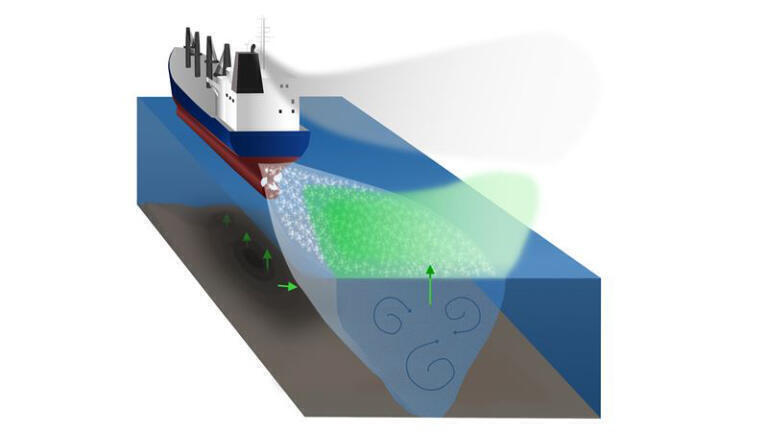
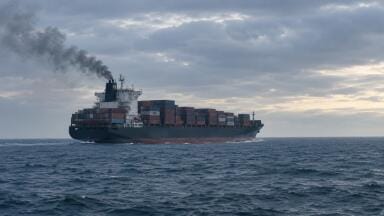
A new study reveals that ships moving through shallow waters—especially in ports—can trigger unexpectedly high emissions of methane, a potent greenhouse gas. Researchers led by Chalmers University of Technology in Sweden found that methane emissions in busy shipping lanes were up to 20 times higher than in undisturbed areas nearby.
"Methane pulses occur when ships pass by, driven by pressure changes and water mixing," explains Amanda Nylund, researcher at Chalmers and the Swedish Meteorological and Hydrological Institute (SMHI). “Though short-lived, these pulses add up to significant daily emissions.”
Unlike the well-known concerns around methane leaks from ships powered by liquefied natural gas (LNG), these emissions are unrelated to fuel type. The study shows that any ship—regardless of how it's powered—can stir up methane stored in seabed sediments. As ships move through shallow, oxygen-poor waters rich in organic matter, they disturb the seafloor and allow trapped methane to escape into the atmosphere.
This phenomenon was first discovered accidentally during unrelated measurements in Neva Bay, part of the Baltic Sea. The breakthrough sparked a broader investigation, now published in Nature Communications Earth & Environment.
“The findings are crucial,” says Johan Mellqvist, Professor of Optical Remote Sensing at Chalmers. “Nine of the world’s ten largest ports are in environments similar to Neva Bay, meaning global methane emissions from shipping could be significantly underestimated.”
The study also found that different ship types trigger varying levels of emissions. Cruise and container ships caused the most frequent and intense methane releases, while ropax vessels (combined freight and passenger ferries) also had a large impact—possibly due to their double propellers. Surprisingly, larger bulk carriers produced less disturbance.
Rickard Bensow, Professor of Hydrodynamics at Chalmers, who led the study’s modeling work, notes, “It’s not just about ship size. Design features like propeller type also matter.”
Looking ahead, the research team plans to assess methane emissions in major global ports, particularly those in river deltas such as Shanghai, Singapore, Rotterdam, and Hamburg.
“It’s likely we’re missing a big part of the methane puzzle,” says Ida-Maja Hassellöv, Professor of Maritime Environmental Science at Chalmers. She will lead a follow-up project launching this autumn to quantify these emissions on a global scale.
IET Guide 2026

 Product directory















.jpg)