Air quality monitoring
Published over 8 years ago. See the latest and most current information on Air quality monitoring.
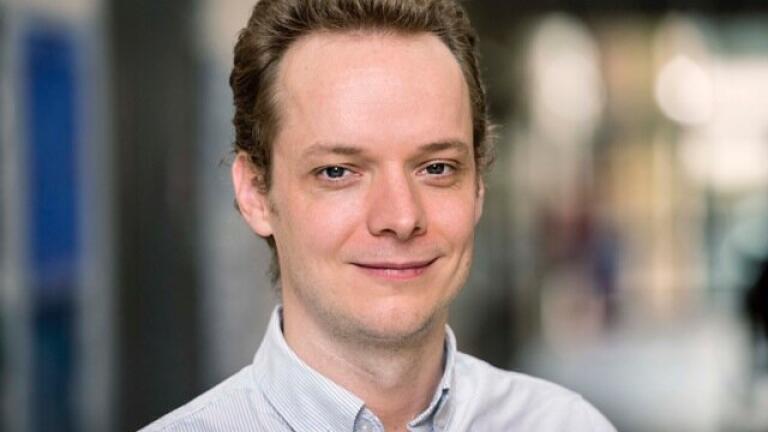
A Senior Lecturer in the University of Chester’s Faculty of Science and Engineering has been appointed as an ad-hoc member of a high profile, independent scientific committee that informs Government on air quality.
As an ad-hoc member of the Air Quality Expert Group (AQEG), Dr Andy Williams will bring his expertise on transport technology, transport emissions and exhaust emission reduction technologies to the advice given to the Department for Environment, Food and Rural Affairs (Defra).
The AQEG is an expert committee reporting to Defra’s chief scientific adviser with independent scientific advice on air quality, in particular air pollutants contained in the Air Quality Strategy (AQS) for England, Scotland, Wales and Northern Ireland. While the committee does not advise on health impacts or air quality standards, it gives advice on levels, sources and characteristics of air pollutants in the UK.
The AQEG works collaboratively with Defra, the devolved administrations, other public bodies, and EU and international technical expert groups. Members of the group are drawn from people with a proven track record in the fields of air pollution research and practice. The AQEG contributes to developing the air quality evidence base by analysing, interpreting and presenting scientific evidence. Giving advice on current and future levels, trends, sources and characteristics of air pollutants in the UK, the committee suggests priority areas for future work.
Dr Williams is a Senior Lecturer in Mechanical Engineering/ Energy Systems. His research focus is on powertrain fluid systems, such as those in internal combustion engines, including exhaust particulate emission reduction systems, thermal management and cooling systems.
He is also co-leader of a special interest group of the UK Fluids Network on particulate matter filtration flows in automotive and marine applications. This group brings together industry and academia, as well as traditionally separated marine and automotive research communities.
Dr Williams said: “I’ve worked with particulate filter technologies, as well as exhaust combustion systems and engine modelling, for more than 15 years and, during that time, I’ve done substantial research into understanding particulates - what they are and how they behave.
“It’s very rewarding to be able to use my knowledge in a way that will benefit everyone by helping improve the quality of the air across the UK.”
IET Guide 2026

 Product directory