Air quality monitoring
A new study shows that traffic-related pollution in central Israel produces rapid, measurable changes in the atmospheric electric field. While gaseous pollutants from vehicles trigger almost immediate electrical responses, fine particulate matter causes slower, delayed effects. The research also identifies a clear weekend signal: reduced traffic and industrial activity lead to a noticeable weakening of the electric field. Together, these findings highlight atmospheric electricity as a highly sensitive, real-time indicator of urban air quality—capable of capturing rapid emission changes that conventional monitoring systems may overlook. The results point to new possibilities for tracking the immediate impact of traffic patterns and emission-reduction policies, with implications for urban planning, environmental monitoring, and public health.
Hebrew University of Jerusalem — A collaborative research team has demonstrated how routine pollution from traffic and industry measurably alters the atmospheric electric field over the Tel Aviv metropolitan area. The study was led by Dr. Roy Yaniv of the Hebrew University of Jerusalem and the Gertner Institute at Sheba Medical Centre, together with Dr. Assaf Hochman from the Institute of Earth Sciences at the Hebrew University and Prof. Yoav Yair of Reichman University. They were joined by Itay Froomer from Hadera High School and the Israeli Museum of Medicine and Science (Technoda), who conducted the research as part of the Ministry of Education’s five-unit physics research track. The project represents an exceptional collaboration linking academic research, the education system, and the wider community.
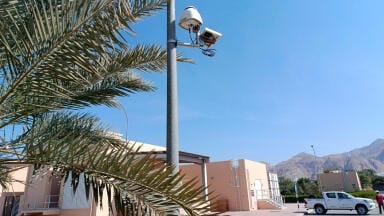
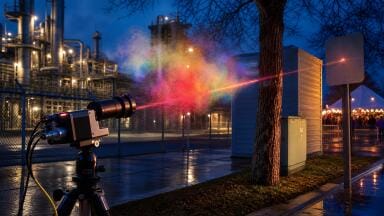
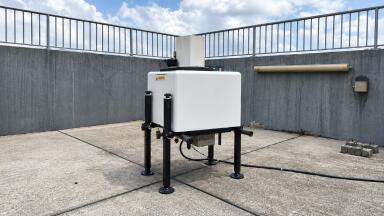
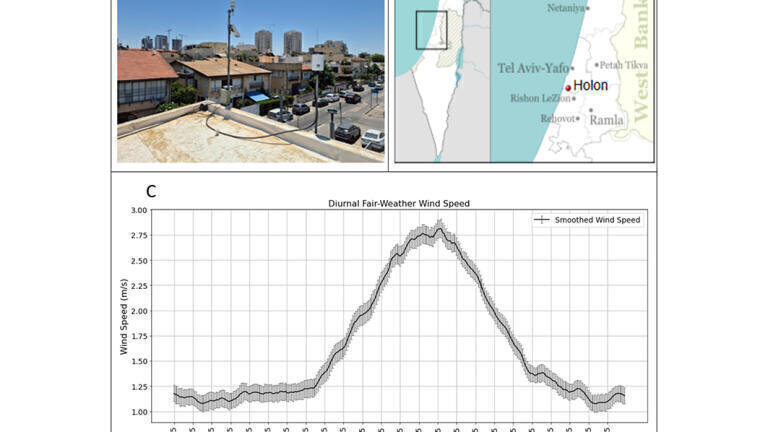
Using measurements from an electric field mill installed at the Centre for Technological Education (Roter House) in Holon—supported by the Ministry of Education and the Holon municipality—alongside high-resolution air-quality and meteorological data, the researchers examined how fine particulate matter (PM2.5) and nitrogen oxides (NOx) influence the atmospheric potential gradient, a key indicator of the electric field under fair-weather conditions. “We see a direct physical connection between emission peaks and electrical variability,” said Dr. Yaniv. “Nitrogen oxides reduce atmospheric conductivity very quickly, so the electric field responds almost immediately during traffic rush hours.” In contrast, PM2.5 produces a more gradual response, reflecting its longer lifetime in the atmosphere and different microphysical behaviour.
The study also reveals a strong “weekend effect.” On Fridays and Saturdays, when traffic and industrial activity in Israel drop sharply, concentrations of NOx and PM2.5 fall—and the atmospheric electric field weakens in parallel. “This weekend signal shows just how sensitive the electric field is to changes in human activity,” the researchers noted. “When emissions decline, the electrical environment adjusts right away, offering a high-resolution snapshot of urban atmospheric conditions.”
By demonstrating how urban emissions reshape the near-surface electric field, the research opens new avenues for interdisciplinary approaches to air-quality assessment and public-health preparedness. It also underscores the value of educational–scientific partnerships that actively involve high-school students in real-world environmental research. “Combining air-quality measurements with electric-field observations gives us a more complete, moment-by-moment picture of how the lower atmosphere evolves,” the researchers said. “This approach can support both fundamental science and informed environmental decision-making.”
IET Guide 2026

 Product directory