Air monitoring
If US regulations on sulphur dioxide are relaxed, environmental monitoring professionals may need to consider how it will be prevented in this absence.
By Jed Thomas
For decades, acid rain was the poster child of environmental catastrophe – lakes stripped of life, forests silently dying, and entire regions bathed in acidic precipitation.
Then it became one of the most notable environmental success stories of the modern era, thanks to scientific vigilance and bipartisan political will.
But now, with sweeping environmental deregulation underway in the United States, many scientists are warning that this hard-won victory could unravel.
At the centre of this warning is Dr. Gene Likens, the pioneering ecologist who first identified acid rain in North America in the 1960s.
Speaking to the press in March 2025, Likens didn’t mince words: “If the Trump administration starts releasing controls on emissions, we are going to destroy that success story.”
The Environmental Protection Agency (EPA), under the direction of Administrator Lee Zeldin, has targeted 31 pollution-related regulations for rollback, many of which directly or indirectly control the emissions that cause acid rain.
This rollback includes weakening emissions standards for coal-fired power plants and reducing vehicle pollution regulations—key sources of sulphur dioxide (SO₂) and nitrogen oxides (NOₓ).
When these compounds react with water and oxygen in the atmosphere, they form sulfuric and nitric acids that return to the Earth’s surface as acid rain.
To the general public, the term 'acid rain' may sound quaint or historical. But for environmental monitoring professionals – scientists, engineers, technicians, and policy advisors – it’s a signal flare.
It means reactivating dormant concerns, strengthening surveillance, and preparing to speak clearly about data in an era of scepticism toward science.
Acid rain isn’t just an abstract environmental concept. It left a visible, measurable mark across the northeastern U.S. and Canada.
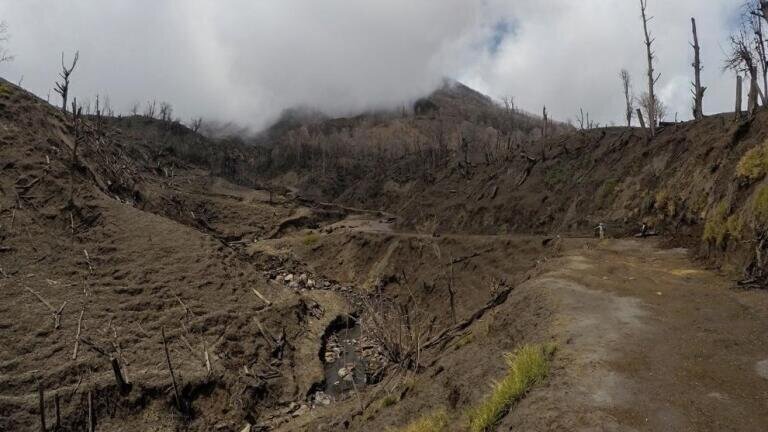
By 1980, rainfall in some areas was ten times more acidic than normal, with pH values low enough to kill fish, leach calcium from forest soils, and dissolve protective coatings from tiny aquatic organisms. Entire ecosystems collapsed.
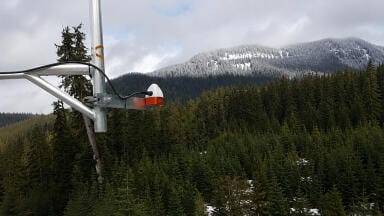
In the Adirondacks, Appalachians, and White Mountains, many high-elevation lakes became lifeless.
This crisis wasn’t solved overnight. It took decades of research, transboundary cooperation, and effective policy enforcement.
The Clean Air Act Amendments of 1990 – signed by Republican President George H.W. Bush – marked a turning point.
By requiring utilities to cut SO₂ emissions and adopt cleaner technologies, the U.S. dramatically reduced acid-forming pollution.
Rainwater pH began to normalize, and sensitive areas began a slow, fragile recovery.
Long-term monitoring data show the scale of that success: acidity levels in the White Mountains have dropped by approximately 85% since their peak.
But those numbers tell only part of the story. While chemical recovery is underway, biological recovery is far slower.
Some lakes are still missing key species. Others, like New York’s Adirondack lakes, suffer from soils still depleted of nutrients like calcium, which acid rain tends to remove.
According to a study from 2012, soils in Adirondack Park, the White Mountain National Forest in New Hampshire, Groton State Park in Vermont and others in Maine have still not recovered their previous concentrations of calcium1, rendering them even more vulnerable if they were to be subject to acid rain in the future.
The Trump administration’s deregulatory push is reshaping the EPA’s mandate.
Rules targeting air pollutants, mercury emissions, vehicle exhaust, and coal ash are all being relaxed.
Most significantly, the rollback of the ‘good neighbor’ rule – which limited cross-state pollution that contributes to smog and acid rain – is poised to increase SO₂ and NOₓ exposure downwind from industrial centres.
According to the EPA’s own internal estimates, these changes could lead to over 200,000 additional deaths from heart and lung diseases over the next quarter-century.
And while new vehicles still come equipped with catalytic converters and natural gas continues to replace coal in many regions, scientists argue these trends are not enough to safeguard environmental health if federal oversight collapses.
Equally troubling is the simultaneous defunding of research and monitoring programs. Gene Likens’ own long-term rainwater acidity study, active since 1976, recently lost its federal funding from NOAA.
Across the country, other acid rain monitoring stations and deposition networks face similar threats.
For those in the environmental monitoring community, this moment represents a potential inflection point. The return of acid rain won’t happen overnight.
But absent safeguards, it could gradually creep back, first affecting the most sensitive ecosystems, those at high elevation or already depleted from past exposure.
Environmental professionals need to ask: are our monitoring systems ready? Here’s a few ideas of how to get them ready.
Rainfall chemistry, ambient air quality, and soil condition monitoring must remain robust.
Programs that were scaled back during the post-acid-rain era now require reexamination and reinvestment.
Portable analysers, remote sensing tools, and automated deposition collectors can augment traditional station-based systems.
But they require trained staff and sustained funding.
Regions like the Adirondacks, Catskills, White Mountains, and Appalachian Highlands should be focal points for intensified monitoring.
These ecosystems have historically borne the brunt of acid deposition and are more vulnerable to recurrence due to their low buffering capacity.
Modern acid rain monitoring can no longer focus on sulphur alone.
Agricultural ammonia, which contributes to nitric acid formation, and mercury – often released alongside SO₂ – also need to be tracked.
Multivariate monitoring, integrating atmospheric, aquatic, and soil data, is now best practice.
If federal support wanes, states, municipalities, universities, and non-profits may need to step in.
This is already happening in climate monitoring, and acid deposition may follow.
Partnerships, decentralized networks, and even citizen science initiatives could provide a safety net.
The history of the regulation of acid rain holds powerful lessons.
It showed that targeted policy, backed by robust science and sustained public pressure, can work.
But it also revealed how fragile environmental progress can be—how easily it can be reversed in the face of neglect or denial.
“It’s frustrating because we know improved air quality is good for the public,” environmental scientist Richard Peltier told The Guardian. “There is a viewpoint now that scientists are the bad guys, that the science is corrupt – things that just aren’t true.”
Monitoring professionals are uniquely positioned not only to detect changes in the environment, but to bear witness when those changes reflect policy decisions rather than natural variability.
In an era of environmental rollback and budget cuts, our role becomes not just technical, but moral.
Whether or not acid rain returns in force depends on what happens next: in courtrooms, in laboratories, and at every monitoring station that still has power and staff.
But one thing is certain: if it does return, we cannot say we weren’t warned.
1 Early indications of soil recovery from acidic depoition in US red spruce forests. Lawrence et al. Soil Science Society of America Journal. 2012.
IET Guide 2026

 Product directory















_(4427399123)-(2).jpg)
.jpg)


.jpg)