Water monitoring
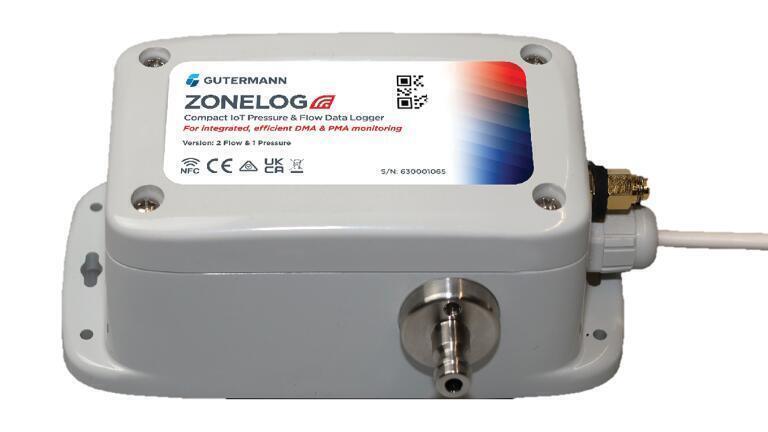
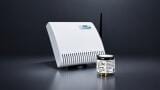
On the 6th World Water Loss Day (December 6th, 2024), Gutermann unveiled its latest innovation, the ZONELOG data logger, designed for flow and pressure monitoring. This ultra-compact instrument marks a significant breakthrough in addressing the global challenge of water loss in drinking water distribution systems and sets new standards in size, precision, and efficiency.
The ZONELOG data logger builds on the foundation laid by the extremely successful launch of the ZONESCAN AI logger the previous year. By introducing this highly advanced instrument to its portfolio, Gutermann provides utilities and municipalities with a sophisticated, complementary tool for continuously monitoring District Metered Areas (DMA) and Pressure Management Areas (PMA). Featuring dual NB-IoT and LTE-Cat-M1 cloud connectivity, the ZONELOG ensures near real-time data uploads hourly while maintaining an impressive five-year battery life. Its user-friendly app-based configuration via NFC further enhances its functionality, making it a sophisticated, robust solution for water loss management.
A notable advancement lies in the synergy between ZONELOG and ZONESCAN AI, which form an integrated approach to network analysis and water loss reduction. The ZONELOG’s precise flow and pressure monitoring capabilities, combined with the advanced leak detection technology of ZONESCAN AI, create a powerful system for real-time network analysis. This integration enables utilities to significantly reduce water loss rates, ensuring operational efficiency and resource conservation.
Gutermann’s innovation extends beyond the hardware by seamlessly integrating acoustic, pressure, and flow data into the company's APP and Cloud platform. The ZONELOG delivers actionable insights to utilities, enabling the detection and resolution of inefficiencies, including reducing non-revenue water (NRW). Furthermore, this advanced tool contributes to sustainability by aiding resource conservation, reducing NRW, and supporting broader environmental goals, including reducing carbon footprint.
IET 36.5 Sept/Oct 2026



 Product directory














.jpg)