River water monitoring
Published over 12 years ago. See the latest and most current information on River water monitoring.
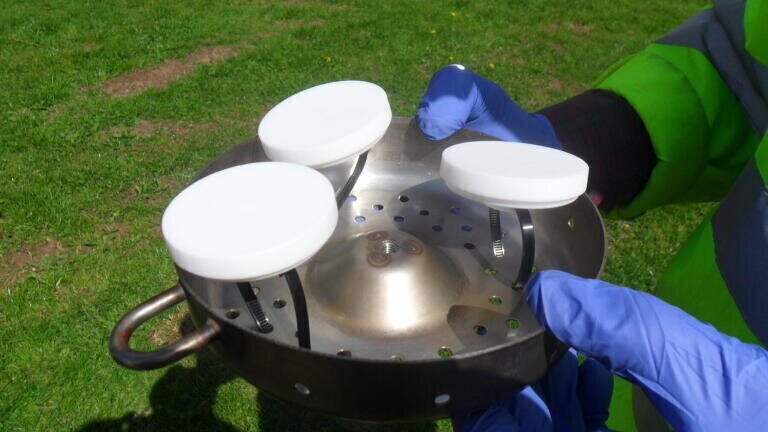
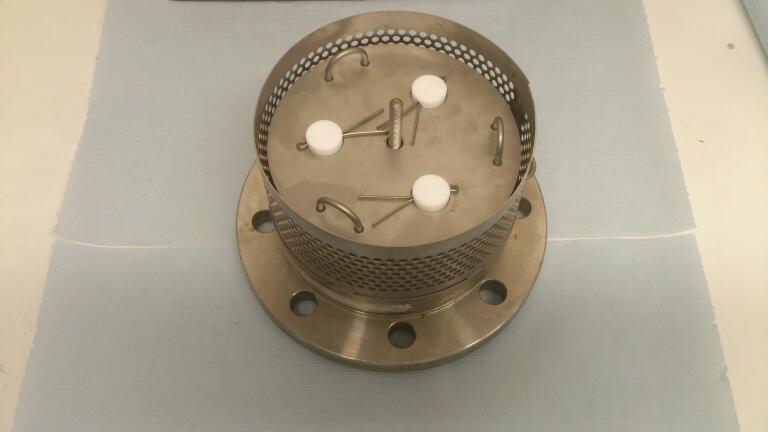
A successful collaboration between South West Water (UK), the University of Portsmouth (UK) and Natural Resources Wales (UK) has resulted in the development of a method for deploying the Chemcatcher passive sampler to monitor for a wide range of acid herbicide compounds in river water.
Following the selection of a suitable receiving phase, laboratory calibration trials using spiked river water confirmed uptake rates for the compounds in question and subsequent elution, extraction and analysis by GCMS gave excellent results correlating with the concentrations from the spiked water.
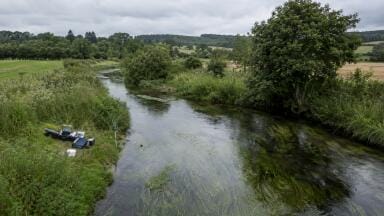
Field deployments have followed on the Rivers Exe, Fowey and Tamar in Devon and Cornwall, typically over a 14 day period. In combination with river flow measurement, time weighted average concentrations can be derived for the following compounds: Bentazone, Bromoxynil, Dicamba, Dichlorprop, Fluroxypyr, MCPA, MCPB, Mecoprop, Triclopyr 2,4-D.
Due to the similarity in chemical structure, the chosen receiving phase can also be used in a ‘screening’ mode for the common pharmaceuticals Ibuprofen, Diclofenac and Naproxen.
Further development work using a different receiving phase has produced very promising results when monitoring for Metaldehyde, the very ‘topical’ and nationally important compound of interest to the water industry, and this work will be taken forward by a NERC 4 year industrial CASE Phd Studentship starting at Portsmouth University in October.
The potential applications for the Chemcatcher include baseline monitoring in advance of catchment management schemes; targeting hot spots in a catchment for interventions; measuring the subsequent benefits/improvements resulting from catchment management initiatives; and more general screening of environmental contaminants including pharmaceuticals, EDC’s, PCP’s, veterinary medicines and priority hazardous substances.
The benefits of passive sampling versus spot samples have been illustrated throughout the field deployments with many examples of significant levels of contaminants being identified whilst being absent in accompanying spot samples.
IET 36.5 Sept/Oct 2026

 Product directory




















.jpg)