PFAS analysis
Over the past two decades, PFAS monitoring has shifted from a niche scientific activity to a central component of global drinking-water protection.
A new bibliometric study in Water & Ecology uses 1,281 publications from 2003–2023 to chart this evolution.
In doing so, offers a clear view of what twenty years of monitoring have taught us about ‘forever chemicals’, including the limits of current analytical systems.
Framed through the lens of long-term monitoring practice, several themes stand out.
The publication curve shows minimal activity until the mid-2000s, modest growth through the early 2010s, and then a sharp surge after the 2017 US EPA health advisories.
This pattern demonstrates that monitoring capacity grows in direct response to regulatory pressure.
When standards tighten, sampling campaigns expand; when guidance is weak or absent, research stagnates.
This remains a structural constraint: scientific understanding repeatedly lags behind regulatory needs, particularly for emerging PFAS chemistries.
Twenty years of studies reveal a consistent blind spot.
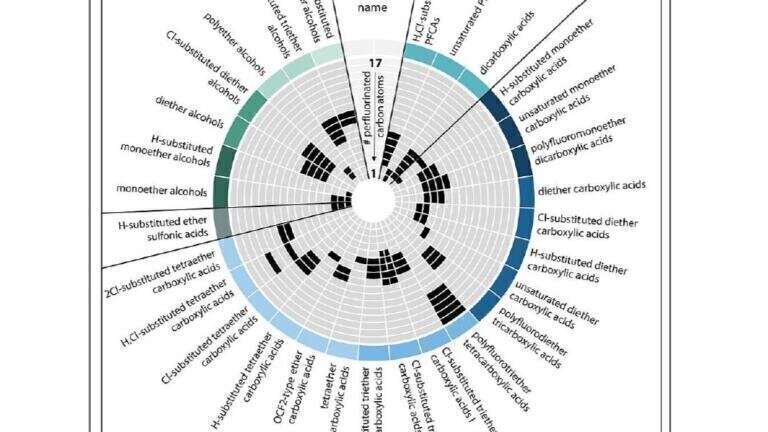
While legacy PFAS such as PFOA and PFOS are well-characterised, short-chain and ether-based replacements remain difficult to detect and track.
Their mobility, persistence and low sorption mean they travel further and appear in more diffuse patterns.
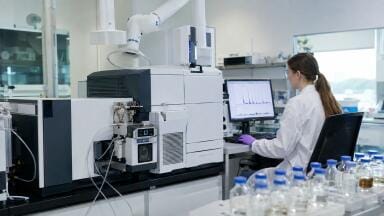
Standard LC-MS/MS methods capture them in principle, but the cost and labour involved limit sampling frequency and spatial coverage.
The result is a patchy global dataset that often fails to identify contamination dynamics early enough for meaningful intervention.
The historical dataset shows that reliance on centralised laboratory analysis restricts both temporal resolution and geographic reach.
In the early years, this limitation was largely accepted because PFAS research was exploratory.
Today, with widespread regulatory action and public concern, the gap between analytical capability and operational monitoring requirements is more visible.
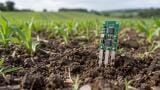
The emergence of portable, high-selectivity field sensors marks a partial turning point, but deployment remains inconsistent and data formats remain non-standardised.
Two decades of evidence suggest that without interoperable sensor networks feeding into unified data systems, monitoring will remain fragmented.
The expanded monitoring record has clarified how PFAS move into drinking water, via surface runoff and atmospheric deposition, but treatment progress has lagged.
Activated carbon, ion-exchange and membrane systems capture PFAS effectively, but they generate concentrated residuals that are difficult to handle.
Advanced oxidation processes offer some destruction capability but remain expensive and chemically demanding.
The long-term record shows that monitoring identifies contamination repeatedly, but treatment technologies have not matured at the same pace, creating a persistent gap between detection and remediation.
Taken together, two decades of PFAS monitoring research point toward the need for coordinated, system-level strategies.
Laboratory LC-MS/MS will remain the analytical anchor, but it must be complemented by field-deployable sensors to close spatial and temporal gaps.
Monitoring frameworks must be designed around all PFAS classes, not only the legacy compounds.
Treatment systems must evolve into multistage “intercept-and-destroy” configurations, supported by clear cost–performance criteria and regulated pathways for managing PFAS-laden residuals.
The central lesson is that monitoring alone does not deliver safer drinking water.
Twenty years of research show that integrated workflows, linking source identification, analytics, field sensors, interoperable data and practical treatment trains, are necessary to translate scientific progress into public-health outcomes.
IET 36.5 Sept/Oct 2026


 Product directory



.jpg)






















.jpg)