

PFAS in water
Ian Ross and Nick Gonda discuss how monitoring of PFASs in the environment might look in the future.
Per- and polyfluoroalkyl substances (PFASs) have been called “forever chemicals” for their persistence in the environment.
Extremely resistant to natural degradation, many PFASs associated with soils, dissolve in water and bioaccumulate in living organisms, raising concerns over their long-term health and ecological impacts.
As Dr Ian Ross noted during a recent Envirotech webinar, the scale of contamination is still being uncovered: “PFASs are now being detected in places we didn’t think to look a decade ago; from remote groundwater to biosolids and even atmospheric deposition.”
This widespread presence has intensified the urgency for robust monitoring strategies.
But testing capabilities have struggled to keep pace with regulatory ambition.
Around the world, regulators are lowering acceptable limits for PFASs in drinking water and the environment.
The US EPA, for example, has proposed enforceable limits for two PFASs in the parts-per-trillion range. While the EU is expanding its priority lists.
Yet, as Nick Gonda explained, the analytical community faces a fundamental mismatch.
“There are thousands of PFAS structures in the environment,” Nick explains.
“But commercially available methods typically target fewer than a hundred.”
“This gap leaves environmental managers with blind spots.”
This divergence between what needs monitoring and what labs can currently measure poses a major challenge for risk assessment and remediation.
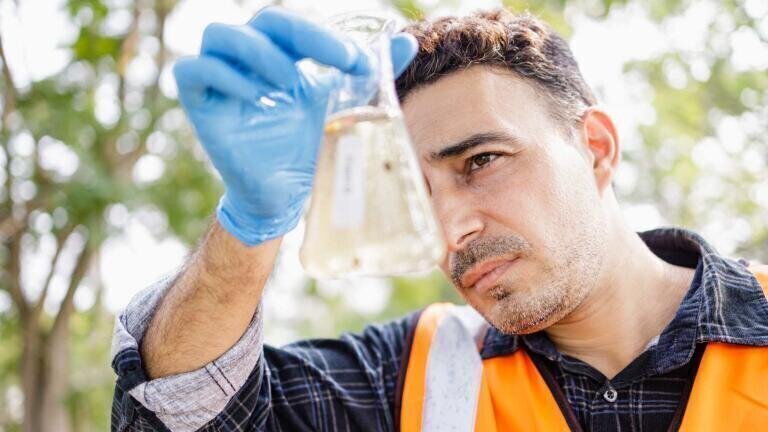
Before even reaching the lab, PFASs monitoring hinges on careful sampling.
Cross-contamination is a constant risk given the extremely low concentrations measured.
Ian highlighted the importance of field practice: “You can have the best analytical instrument in the world, but if your sampling isn’t well considered - if you’re using the products containing PFASs whilst sampling or not thinking about contamination pathways - your results may be compromised before you even begin.”
EPA and ISO guidelines increasingly stress field blanks and attention to equipment materials to minimise artefacts.
Commercial laboratories generally offer targeted PFASs methods.
They report on a list of compounds that regulators have specified.
These approaches are reliable, sensitive, and practical for routine monitoring.
But as Ian reminded attendees, this only scratches the surface.
“In many cases, we’re seeing a very small percentage of the total PFASs load with conventional targeted methods,” Ian explains.
“That means the majority of PFASs in a sample remain unidentified.”
Non-targeted approaches, using high-resolution mass spectrometry, can reveal hundreds of additional PFASs.
However, they are costly and complex.
Nick emphasised the trade-off: “Non-targeted analysis is invaluable for research, site characterisation and method development.
“It's being applied in some jurisdictions in the US and Australia for routine compliance testing.”
In response to the analytical gap, interest is growing in “total PFAS” methods, such as total oxidisable precursor (TOP) assays or total organic fluorine analysis.
These techniques aim to capture a broader picture of contamination. They include precursors that may transform into regulated PFAS over time.
But results can vary significantly.
Nick cautioned: “Different total PFASs methods can give results that differ by orders of magnitude.
“They’re powerful tools for screening. But they need to be interpreted carefully and in context.”
Ian added that total measurements can still guide decision-making: “If your targeted methods show one result, but your total fluorine analysis shows something a hundred times higher, that’s a red flag!
“It tells you there’s likely a lot more PFASs there than you’re accounting for.”
Several case studies were shared during the webinar, illustrating how PFAS monitoring evolves in real-world contexts.
In one example Ian described, early monitoring suggested low PFAS levels at a site. That was until non-targeted analysis revealed significant concentrations of overlooked compounds.
“Without that broader analysis, you’d assume the risk was minimal.
“But the reality was very different,” he explained.
Beyond environmental monitoring, PFASs analysis is increasingly relevant in legal and regulatory disputes.
Ian, who regularly acts as an expert witness, stressed the forensic implications, pointed out that.
“You need a defensible rationale for your PFASs chemical analytical strategy.
“And you need to show you’ve considered PFAA-precursors, pathways and uncertainties.”
The growing body of litigation around PFASs contamination underscores the importance of transparent and well-documented analytical approaches.
Looking forward, both speakers emphasised the need for innovation that balances practicality with comprehensiveness.
Nick outlined the industry’s direction: “We’re seeing advances in chromatography, high-resolution mass spectrometry and automation that will make broader PFASs monitoring more accessible.
“The challenge is bringing these capabilities into mainstream labs without overwhelming costs or complexity.”
Ian added that progress will also depend on better toxicology data.
“We can’t just measure everything,” he says.
“All PFASs exhibit extreme persistence, which includes those that naturally transform into persistent daughter products, but we need to prioritise PFASs based on bulk and dispersive usess, bioccumulation potential, mobility, toxicity and exposure.
“That’s where collaboration between chemists, toxicologists and regulators is essential.”
Ultimately, PFASs monitoring requires not just better tools, but also better communication.
As Ian concluded: “There’s no silver bullet.
“It’s about combining targeted, total and non-targeted methods where they make sense, being honest about limitations, and ensuring stakeholders - from regulators to communities - understand what the data means.”
Nick agreed: “This is an area where collaboration matters.
“No single lab, company or regulator can solve PFASs monitoring alone.
“Sharing methods, sharing data and building confidence in the results is the way forward.”
IET 36.5 Sept/Oct 2026



 Product directory




.jpg)
























.jpg)