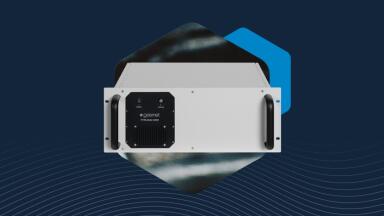
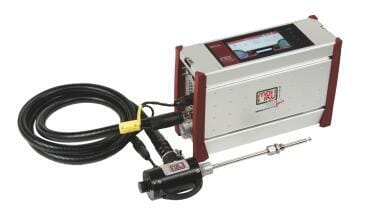
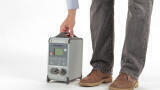
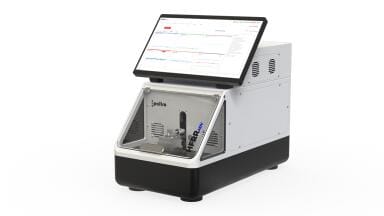
Servomex Group (UK) has successfully attained MCERTS approval for its 4900 CEMS analyser and its 2510 infrared gas analyser for Nitrous Oxides (N2O) measurements.
The independent thirdparty certification makes the analysers even more attractive to companies who are seeking to reduce N2O emissions and thereby claim valuable credits under the incentives provided by the Clean Development Mechanism (CDM) and Joint Implementation (JI) Projects (as part of the Kyoto Protocol).
In order to claim credits for N2O abatement, a company must prove the reductions achieved. Therefore it first has to set a benchmark by operating the plant for a full campaign, typically three or six months, with an analyser in place but no abatement system. After the abatement system has been commissioned, the emissions must be monitored again. The relevant authorities then take the best 'before' and worst 'after' data (ie the lowest emissions prior to abatement and the highest emissions after abatement) and use this as the basis on which credits are awarded, also taking into account any sources of uncertainty in the readings. Due to the high value of the credits, it is vital that the N2O analyser is as accurate as possible.
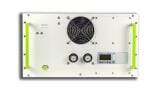
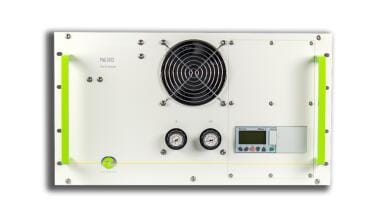
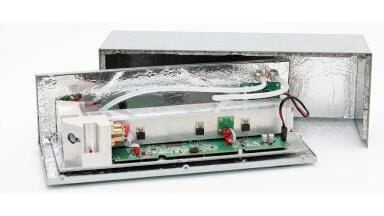
The dualrange 2510 infrared gas analyser utilises gas filter correlation (GFC) technology and is capable of measuring the 'before' and 'after' N2O emissions (typically in the region of 1600 vpm and 200 vpm, respectively) which eliminates a potential source of error that would arise if two separate instruments were required. Furthermore, the GFC technology ensures that the measurements are virtually immune to crossinterference and they are accurate even for low concentrations of the target gas. The analyser itself is able to accept the gas sample 'as is', with no need for sample conditioning which would be another potential source of error.
The 4900 analyser was specifically designed for Continuous Emissions Monitoring, where legislation requires the measurement of several gas components in flue gas. It measures oxygen by a magnetodynamic paramagnetic sensor and NO, N2O, CO and SO2 by infrared GFC technology.
Both analysers are suitable for use with CDM methodology AM00034 whilst the 2510 is ideally suited to the more process orientated AM00051 methodology.
This latest MCERTS certification also approves both analysers for use in continuous emissions monitoring on incinerators and large coalfired combustion plants.



 Product directory