Environmental laboratory
Published over 12 years ago. See the latest and most current information on Environmental laboratory.
Citing concern about suspected threats to the health of humans and wildlife, the European Union’s Marie Curie European Industrial Doctorate program has awarded a €1.2 million research grant to four early-stage researchers from Asia, Australia and Europe to study the environmental effects of one of the most common types of flame retardants.
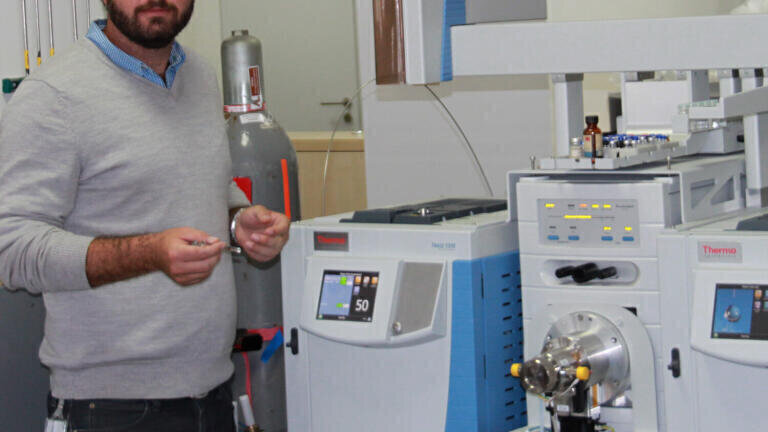
The four-year grant, entitled “Elucidating Sources and Pathways of Environmental Contamination with Brominated Persistent Organic Chemicals Using Advanced Instrumental Tools (ELUTE),” will allow researchers to pursue individual projects in the laboratory of Stuart Harrad, MSc, Ph.D.at the University of Birmingham, UK, and the Thermo Fisher Scientific (USA) Persistent Organic Pollutants (POPs) Center of Excellence in Bremen, Germany.
The European Union bans or restricts use of certain brominated flame retardants (BFRs), but their persistence in the environment causes concern about risks to public health, according to the European Food Safety Authority (EFSA). The ELUTE project’s main research goal is to increase understanding of “the environmental fate and behavior of brominated persistent organic chemicals, and how best we may deploy recent advances in analytical instrumentation to do so.”
The research will focus on the following areas: Screening and tracking sources and fate of BFRs in environmental samples using the following Thermo Scientific systems: The Niton XRF (x-ray fluorescence) portable analyser; iCAP Q ICP-MS with ion, liquid and gas chromatography and laser detection; Neptune Plus High-Performance Multicollector ICP-MS system, and Dionex ASE 350 Accelerated Solvent Extraction system; Elucidating the sources of brominated dioxins and tracking of brominated pollutants by compound-specific isotope signatures using the following Thermo Scientific instruments: DFS High-Resolution GC-MS system, Trace 1310 GC system, TSQ 8000 Evo GC-MS/MS system, Neptune ICP-MS system, and Dionex ASE 350 system; and Assessment of environmental trends or human exposure by identifying new brominated pollutants and their metabolites, using Thermo Scientific Orbitrap-based LC-MS and GC-MS systems together with Dionex ASE 350 system.
“A particularly novel feature of ELUTE is its strategy to tackle its research objectives using the dual perspectives of industry and academia, with additional input from the policy-making sector to ensure that its trainees will be able to follow the research thread all the way from bench to science policy,” said Professor Harrad.
“We’re very pleased to be a partner in this important environmental research,” said Kyle D’Silva, product manager, Thermo Fisher Scientific, and director of research for ELUTE. “It aligns perfectly with our corporate mission to enable our customers to make the world healthier, cleaner and safer.”
IET 36.5 Sept/Oct 2026





 Product directory