Environmental laboratory
Published over 16 years ago. See the latest and most current information on Environmental laboratory.
Thermo Fisher Scientific (USA) announce a new application note entitled “Direct Analysis of Red Wine Using Ultra-Fast Chromatography.” The application note explains the unique capabilities of ultra high pressure liquid
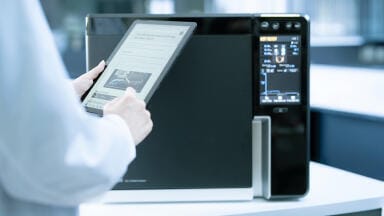
chromatography (U-HPLC) coupled to a Thermo Scientific Orbitrap mass spectrometer for use in the identification and quantitation of antioxidant constituents in red wine. The LTQ Orbitrap XL™ hybrid mass spectrometer
combined with Accela™ U-HPLC delivers fast analysis times and accurate mass measurements, confirming the identity and structure of compounds in these complex mixtures. The application note is available for download at www.thermo.com/redwine
There is a growing interest among nutrition and health researchers in advanced liquid chromatography and mass spectrometry techniques. Red wine is a highly complex mixture and a rich source of beneficial antioxidants. It contains natural compounds that may, if consumed regularly and in moderation, have a positive impact on human health. In complex matrices, however, as is the case with red wine, identification and quantitation of natural compounds is challenging.
The application note demonstrates the potential of a direct analysis of red wine using the high resolving power of both the Accela and the LTQ Orbitrap XL. Researchers identified phenolic compounds responsible for most
health benefits associated with red wine, such as quercetin, and they observed variable content across two different harvest years. Comparative analyses were performed using Thermo Scientific SIEVE 1.2 software. The
features were filtered for statistical significance, with significant change defined as a minimum of two-fold concentration difference between the two harvest years. The results presented in the application note show
statistically significant changes for individual compounds detected across two harvest years. The concentration differences for some compounds, particularly quercetin, were considerable.
The LTQ Orbitrap XL delivers extremely high mass accuracy and resolution and is capable of multiple levels of fragmentation. The Accela U-HPLC affords fast analysis time while maintaining very high chromatographic resolution, which is important for complex matrices. The combination of the LTQ Orbitrap XL with Accela U-HPLC provides a robust and confident means of profiling complex mixtures as well as successful identification and advanced structural characterisation of detected compounds without prior sample preparation.
IET 36.5 Sept/Oct 2026




 Product directory