Environmental laboratory
Published over 7 years ago. See the latest and most current information on Environmental laboratory.
Elemental mercury (Hg0) has a significant vapour pressure and exists in workroom air in those industries that continue to use mercury in manufacturing, reprocessing and recycling activities.
The vapour within the workroom may be inhaled causing harm or illness and the well documented health effects depend on the concentration of mercury in the workroom and the exposure time. These problems can result from both short-term and long-term mercury exposure.
Industries affected include those that manufacture semiconductors, batteries, fluorescent tubes, and the chlor-alkali, pulp, paper and paint industries. An area of concern is the recycling of mercury containing materials such as the reprocessing of adsorbents material used in mercury removal processes from the petrochemical industry.
Monitoring these air impurities in the workplace is an important part of the assessment of risks to health. Companies should ensure that exposure of workers is regularly monitored and that their exposure levels are below the relevant Occupational Exposure Limits (OELs).
More recently the trend towards the use online analysers has grown. This is not surprising given the requirement for continual monitoring, less operator error and generally reduced staff resources.
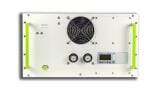
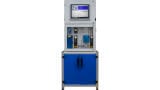
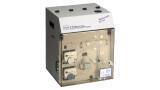
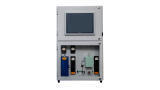
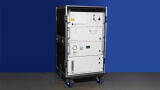
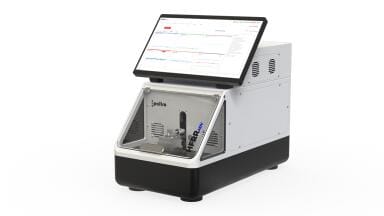
The PS Analytical 10.216 series workroom analysers are designed to continuously monitor the Hg concentration in workroom air. The system comprises a touchscreen computer coupled with one or two atomic fluorescence spectrometers. This approach offers both excellent sensitivity as well unrivalled selectivity and linearity. The systems are equipped with automated calibration capability.
The analysers measure gas phase mercury and depending on configuration has a response time of less than 30 seconds. Each detection system is capable of connecting to multiple sample probes so that multi-room monitoring can be achieved at a reduced cost.
IET 36.5 Sept/Oct 2026





 Product directory