Water pollution monitoring
Costal and seawater matrices are considered some of the most difficult sample types to analyse because of the often ultra-trace concentrations of target analytes, as well as the high total dissolved solids (TDS) that are present.
There are matrix and spectral interferences that analytical challenges using the common ICP-MS approach as the high TDS can lead to salt precipitation within the nebuliser, torch, and cones. This is normally addressed by diluting the sample, but this has the undesired consequence of diluting the already ultra-trace concentration of Hg, As and Se making accurate and precise analysis very difficult.
Elevated concentrations of sodium, magnesium and chloride, form polyatomic spectral interferences making the determination of elements, such as As and Se, more complicated (often addressed by employing a collision gas cell to try and overcome these interferences).
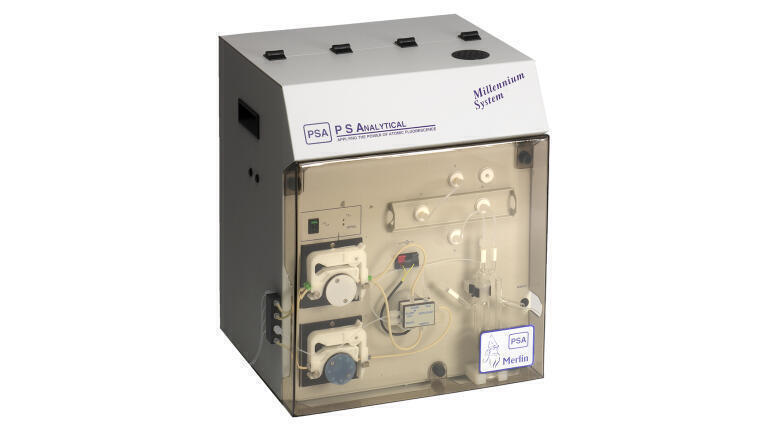
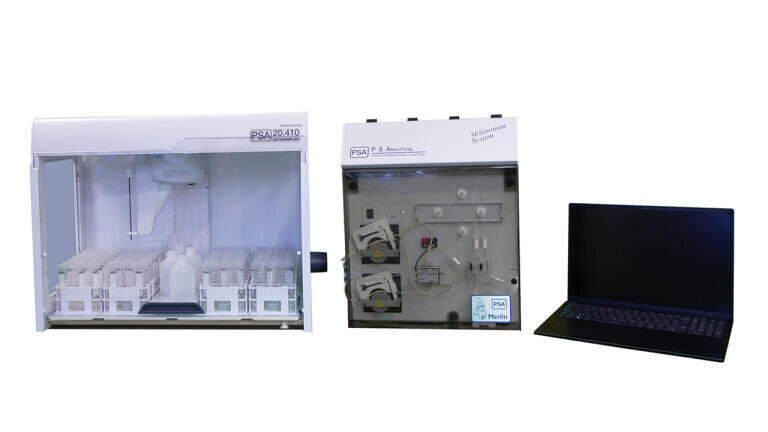
The employment of P S Analytical instrument, the Millennium Merlin 1631 (for Hg) and the Millennium Excalibur (for As and Se) for seawater analysis, are useful as the systems are not subject the interferences by either high TDS or polyatomic spectral issues.
These systems offer excellent sensitivity (in the ppt range), wide linear working ranges, ease of use and rapid return on investment.
The analysers also allow the determination of these analysts in other environmental matrices, such as drinking water, wastewater, soils, sediments and sludges.
Extending the capability still further into speciation studies of these elements is also possible with the employment of the modular interface.
IET 36.5 Sept/Oct 2026




 Product directory



























.jpg)