Sea fish has a notoriously short freshness span between catch and degredation. This is why maintaining the freshness of the fish throughout the production chain presents a major challenge to the fishing industry. A simple ion chromatographic method using
conductivity detection helps to meet this challenge. It does not require an elaborate derivatisation and allows the simultaneous determination of dimethylamine, trimethylamine, trimethylamine N-oxide, histamine, putrescine and cadaverine.
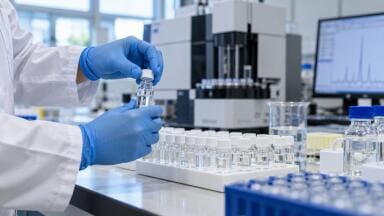
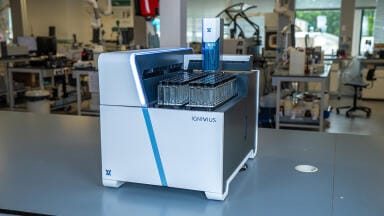
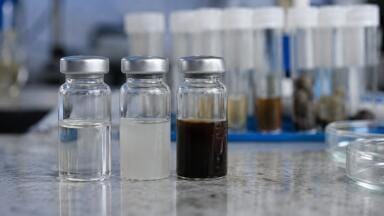
5 g of sea fish is mixed with 50 mL acetate buffer pH = 4.8 and homogenised with a dispersing instrument. The sample solution is filtered and subsequently injected automatically using an IC Sample Processor. Three spiked samples are prepared in the same way by adding 300, 500 or 700 ìL of mixed amine standard to the fish prior to sample preparation. The system and the IC method are checked using various standard solutions as well as a sample solution spiked after sample preparation. The determination of the amine concentrations is always carried out by calibration with external standards (7-point calibration).
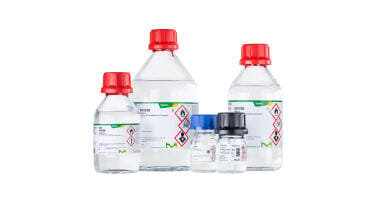
A kit for testing 10 sea fish samples is available from Sigma-Aldrich Chemie GmbH (formerly Fluka; Fluka no. 53851).
This kit has been developed in cooperation with Metrohm (Switzerland) and includes the IC precolumn, the reagents for the eluents as well as the buffer and the standard solutions.




 Product directory