Environmental laboratory
Published over 10 years ago. See the latest and most current information on Environmental laboratory.
In environmental samples, mercury comes in various species. For example, in rocks, ores, soils, and sediments, mercury can occur in its synergetic form, bound to organic or inorganic matrices, sulfides, silica, carbonate minerals, and elemental Hg. These forms have different matrix binding energies and can be identified by the so-called thermoscanning technique based on real-time detection of mercury emission from a sample during gradual heating.
In a research project supported by the National Research Foundation of South Africa and the Russian Federation for Basic Research, more than 100 samples from 35 coal deposits were studied. The project helps us better understand the properties of coal, and proposes an efficiency enhancement for pre-combustion treatment to reduce emissions.
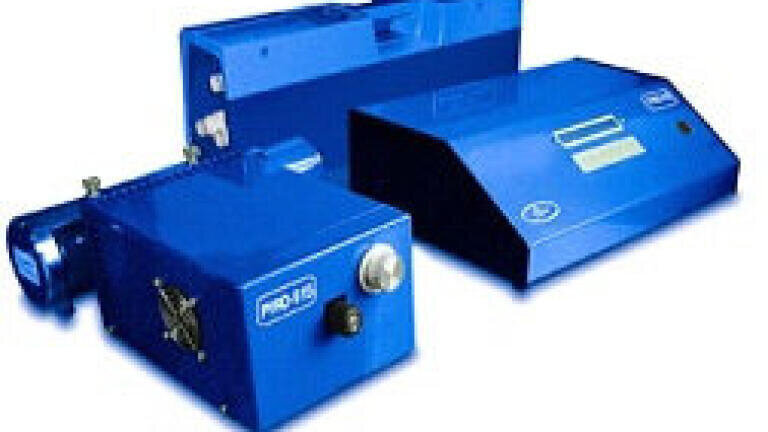
The analytical set consists of a standard RA-915M Zeeman mercury atomic absorption spectrometer coupled with a PYRO-915 pyrolysis attachment (Lumex Instruments). The special automated mode of the gradual heating of the PYRO-915 atomiser was developed and optimised to study mercury thermospecies in solid samples.
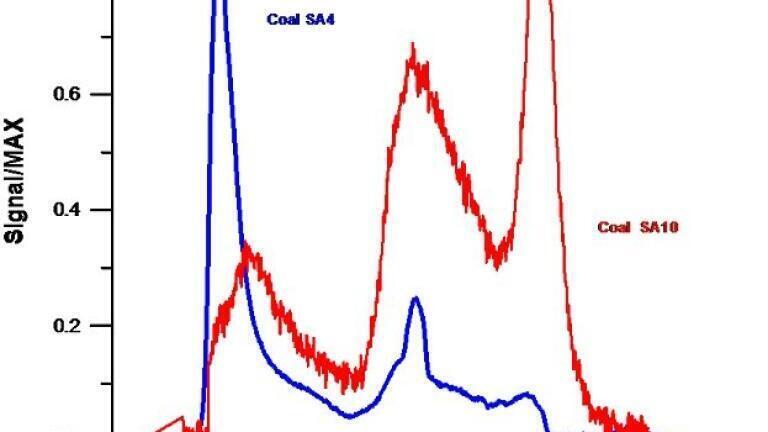
In the same analysis, the total mercury concentration is determined. The analysis of various types of samples reveals variously shaped mercury thermospectra. An example of such measurement of coal samples is shown on the figure below.
The low-temperature points can be attributed to mercury that has been bound by physical sorption and occluded. The mid- and high- temperature points occur due to mercury bound to organic coal matrices, sulfides, and silicates. The thermoscanning technique enables identifying mercury bound to pyrite and other sulfides and gives additional information about mercury speciation in samples.
The information obtained by thermoscanning may also be useful for other applications such as determining mercury species in mercury-contaminated soil, an important step in optimising remediation conditions.
For further information please contact us.
IET 36.5 Sept/Oct 2026



 Product directory