Environmental laboratory
Published over 17 years ago. See the latest and most current information on Environmental laboratory.
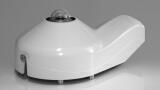
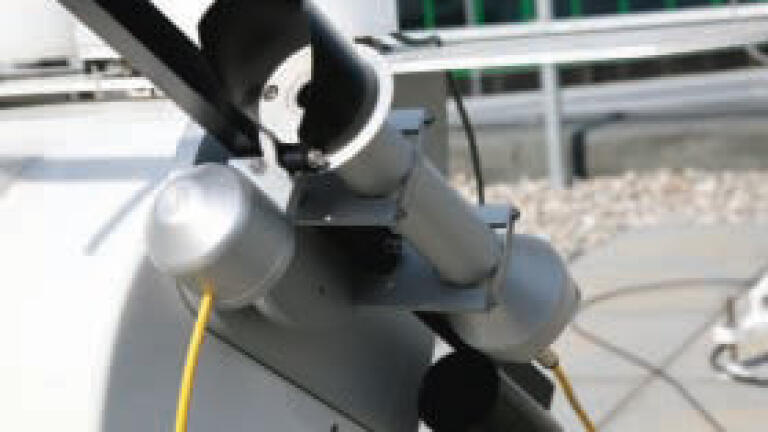
Kipp & Zonen (The Netherlands) has improved its first class normal incidence pyrheliometer. The new CHP 1 pyrheliometer has improved performance and is updated with the latest developments. Following the footsteps of its predecessor, the CHP 1 offers the best accuracy and reliability available.
CHP 1 pyrheliometer: A pyrheliometer is an instrument that measures the direct component of solar radiation at normal incidence. A pyrheliometer needs to be pointed at the sun at all times so that the solar disk always falls within the field of view of the instrument. Using an automatic sun tracker, such as the Solys 2, the direct solar irradiance can be measured very accurately
during the whole day.
CHP 1 is a new pyrheliometer that builds on the legacy of the CH 1, offering the reliability and durability of its predecessor together with important improvements. Highlights are the new detector design that has an improved response time and minimizes the influence of ambient temperature fluctuations. An internal temperature sensor is installed as standard. Moreover the new design is more installation and service friendly thanks to the new signal cable connector and screw-in desiccant cartridge.
The specifications exceed the ISO 9060 ‘First Class’ standard and CHP 1 meets all the requirements for high end solar radiation networks, such as the BSRN (Baseline Surface Radiation Network). During its development CHP 1 has participated in field campaigns, including the IPC-X pyrheliometer intercomparison at the World Radiation Centre in Davos Switzerland, with excellent results.
CHP 1 is the best choice available for high accuracy measurements of direct solar radiation for meteorological, climatological and renewable energy research. It fits easily to all Kipp & Zonen sun trackers, including the new SOLYS 2 because the mounting size of the CH 1 and CHP 1 are identical.
IET 36.5 Sept/Oct 2026




 Product directory