Environmental laboratory
Published over 7 years ago. See the latest and most current information on Environmental laboratory.
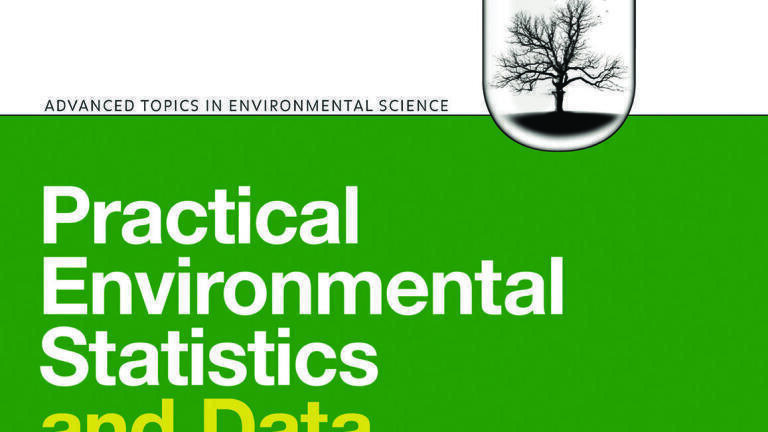
Most environmental problems involve a large degree of uncertainty, and one way to improve understanding of the issues affecting the global environment is the use of statistics. This book describes the application of statistical methods in different environmental fields, with an emphasis on how to solve real-world problems in complex systems.
The book provides a perspective on how environmental professionals are practicing statistics in areas such as environmental forensics, ecological populations, environmental policy-making, groundwater monitoring networks and water quality monitoring. A section containing figures in full colour illustrates the topics discussed. The pitfalls of common statistical methods are also included to assist practitioners.
With chapters contributed by international experts with backgrounds in academia, industry and government agencies, this book is required reading for environmental decision-makers, planners and regulators, as well as academics and professionals in environmental science, engineering and mathematics.
“This book provides a valuable contribution to our understanding of statistical methods that are of particular relevance to environmental problem solving and decision making. The book chapters, written by authors with a wide range of academic and professional backgrounds, provide basic information about appropriate statistical methodologies to be employed when studying environmental problems, as well as practical guidance for applying them to specific types of issues and cases. ”
Robert B. Wenger, Professor Emeritus, Natural and Applied Sciences (Mathematics),
University of Wisconsin–Green Bay, Wisconsin, USA
More information can be found online at www.ilmpublications.com
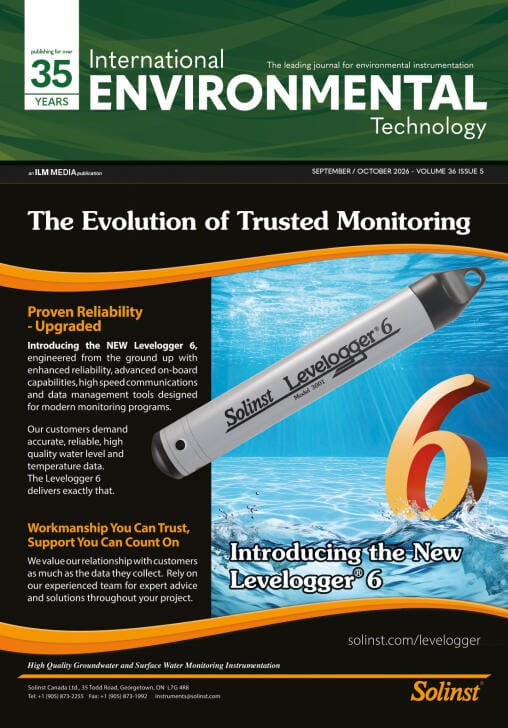
IET 36.5 Sept/Oct 2026


 Product directory