Air monitoring
Published over 5 years ago. See the latest and most current information on Air monitoring.
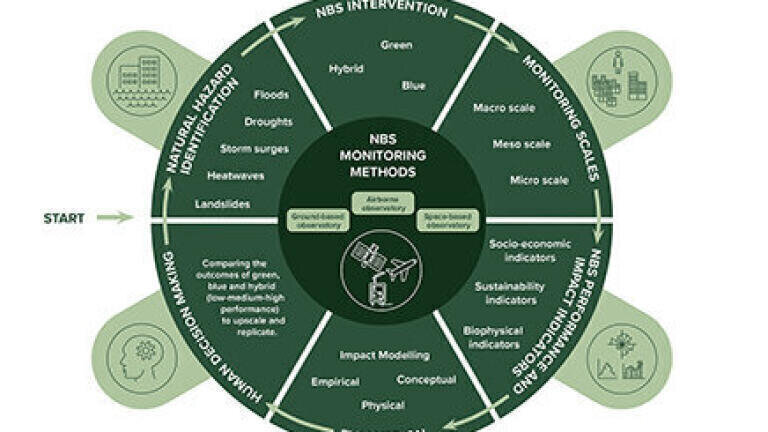
Remote monitoring using airborne devices such as drones or satellites could revolutionise the effectiveness of nature-based solutions (NBS) that protect communities from devastating natural hazards such as floods, storms and landslides, say climate change experts from the University of Surrey.
Grey structural measures (a collective term for engineering projects that use concrete and steel) like floodgates, dams, dikes and sea walls are still the most common methods to guard against natural hazards. However, these 'grey measures' are expensive and lack the long-term flexibility and sustainability needed to help communities manage their growing population and address the planet's ongoing struggle against urbanisation and climate change. While NBS are cost-effective, their usability and reproducibility are often hindered by the lack of standard monitoring methods, tools and indicators.
In a comprehensive study published in the Earth-Science Reviews journal, researchers from Surrey's Global Centre for Clean Air Research (GCARE) collaborated with experts from across Europe* to analyse monitoring methods that measure the effectiveness of NBS – such as wetlands, forest restoration projects and installation of green walls.
In the paper, the team found that while there is a need for combining ground and remote monitoring methods for holistic assessment, the advances in remote monitoring techniques present a significant source of hope for routinely, continually and accurately measuring the effectiveness of NBS and quelling skepticism around choosing NBS over grey-engineered options. Remote monitoring offers the ability to cover large geographical areas, and high-resolution imagery could change the way farmers, scientists, hazard managers and other decision-makers view NBS usage and replicability.
However, the study also warns that the lack of globally accepted standards to gauge an NBS success hinders their progress and use and needs to be urgently addressed.
IET 36.5 Sept/Oct 2026


 Product directory


.jpg)















.jpg)
.jpg)