Air quality monitoring
Air pollution, particularly from volatile organic compounds (VOCs), remains a critical environmental and public health concern in industrialized regions. In South Korea, where industrial complexes contribute significantly to VOC emissions, real-time pollution monitoring is essential. Traditional methods, such as thermal desorption-gas chromatography (TD-GC-FID), often fail to provide timely, cost-effective, and comprehensive data. However, a cutting-edge technology—Selected Ion Flow Tube Mass Spectrometry (SIFT-MS)—is transforming the landscape of air quality monitoring.
Unlike conventional techniques that require time-consuming sample collection and lab analysis, SIFT-MS provides real-time, on-the-move monitoring. This technology enables broad-spectrum, high-sensitivity detection of VOCs at ultra-trace levels, making it ideal for industrial air quality assessments. The ability to switch between multiple reagent ions enhances specificity, allowing for accurate identification of pollutants even in complex mixtures.
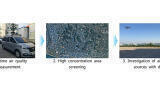
To tackle VOC pollution more effectively, mobile SIFT-MS laboratories have been deployed in South Korea’s industrial zones. These mobile labs consist of a van equipped with:
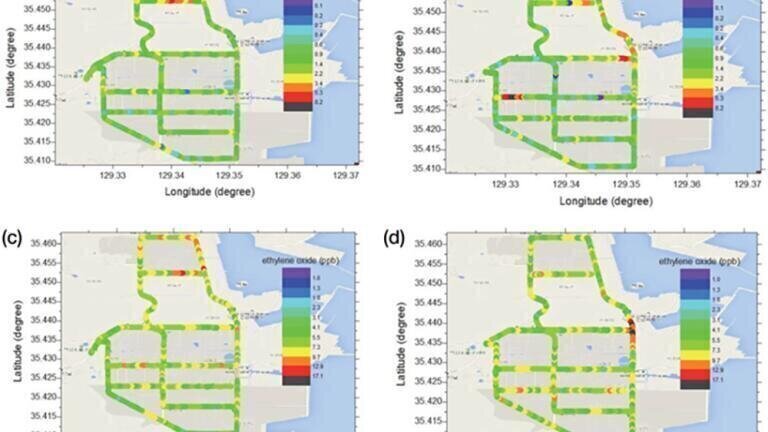
By continuously collecting data while in motion, these labs can create detailed pollution maps, identifying emission hotspots and tracking pollutant dispersion patterns.
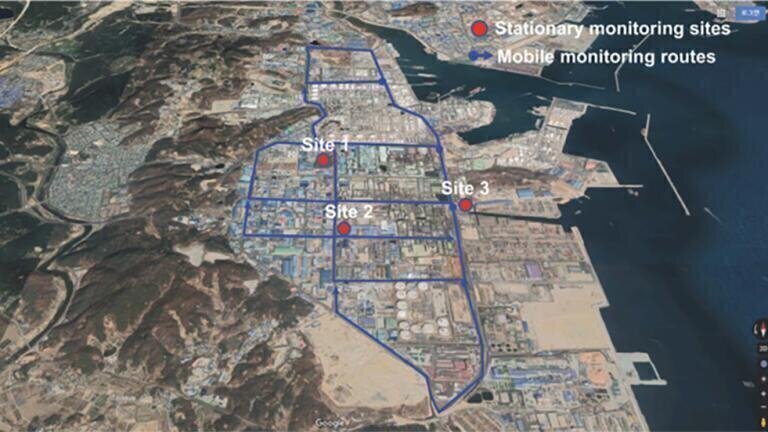
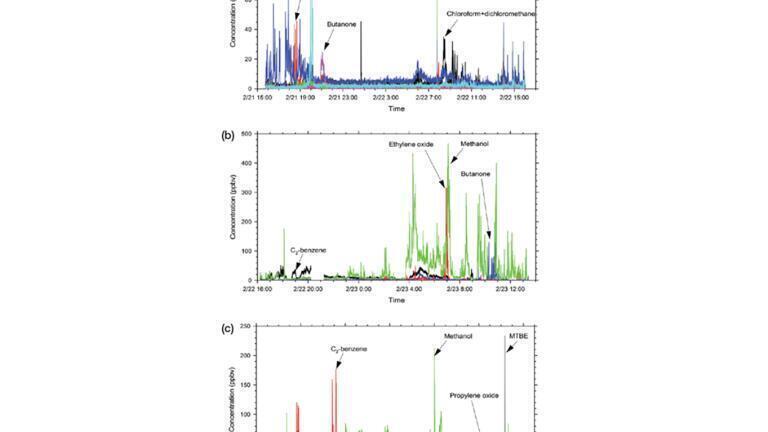
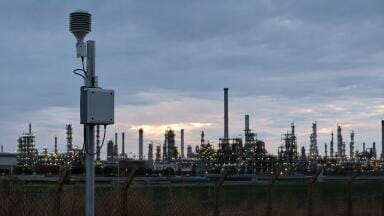
A notable deployment of mobile SIFT-MS technology took place in Ulsan, home to one of South Korea’s largest petrochemical complexes. Researchers monitored hazardous air pollutants (HAPs) at multiple fixed locations and along designated routes within the industrial facility. The results highlighted how pollution levels varied across different sites and times of day, emphasizing the limitations of fixed monitoring stations. Real-time mapping provided a comprehensive overview, revealing emission sources and supporting rapid response efforts.
Mobile SIFT-MS laboratories empowers regulatory agencies, industries, and communities to make informed decisions regarding air quality management. As South Korea continues to advance its pollution control strategies, mobile SIFT-MS monitoring is set to play a crucial role in protecting both the environment and public health.
Learn more by reading the application note, The SIFT-MS Mobile Laboratory. Part 1: Spatial Mapping of Volatile Pollutants.
IET Guide 2026

 Product directory



















.jpg)