Air quality monitoring
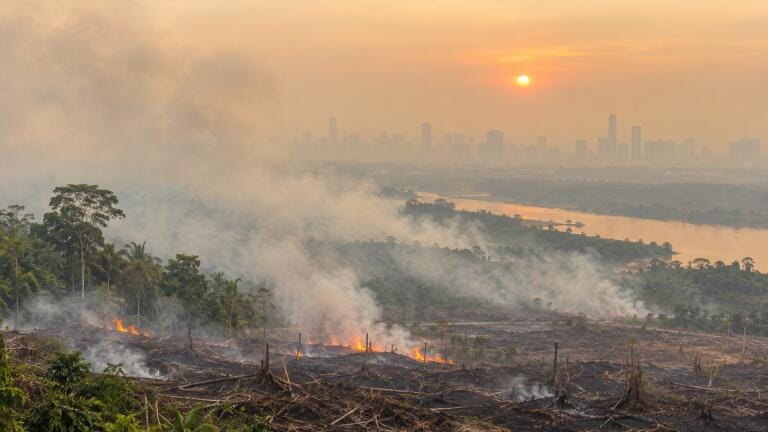
With smoke from forest and land fires crossing national borders, a regional clean air organisation has called for coordinated monitoring, health protection and fire prevention across south-east Asia.
Clean Air Asia has urged leaders of the Association of Southeast Asian Nations (ASEAN) to give transboundary haze priority attention when they meet in Manila for the ASEAN Summit in November. The organisation described the current episode as a serious regional problem that demands a joint response without delay, arguing that no single country can tackle air pollution that ignores national boundaries.
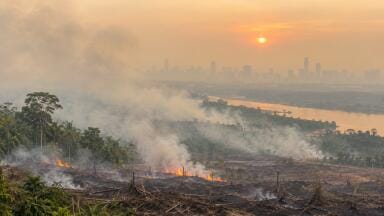
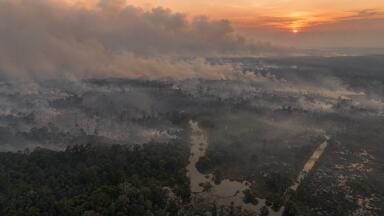
The haze is largely driven by forest and land fires, worsened by prolonged dry conditions. Its health risks extend well beyond the areas where fires are burning, and the social and economic costs are already visible. In affected communities, schools have suspended in-person classes, health advisories have been issued and outdoor activities have been restricted.
Businesses are also feeling the effects through disruption to operations, tourism, logistics and supply chains, while exposure poses risks to worker health and productivity. According to Clean Air Asia, this shows that haze threatens education, livelihoods and economic activity across the region, not just public health.
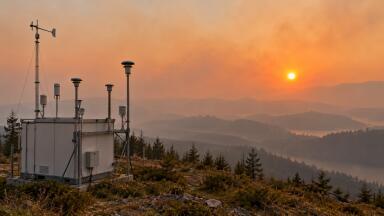
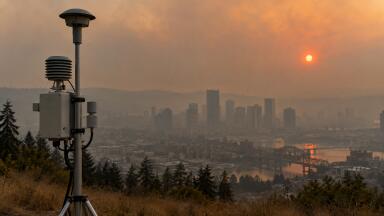
Acknowledging the work already under way by national governments and regional institutions, the organisation called for timely, coordinated measures to protect people in affected areas. Its priorities are stronger air quality monitoring, prompt public access to reliable information and health advisories, and priority protection for vulnerable communities.
It highlighted satellite tools such as the Copernicus Atmosphere Monitoring Service (CAMS) Fire Emissions Watch, which tracks wildfire activity and emissions across the region, as a means of guiding that response.
Clean Air Asia backed continued cooperation between ASEAN member states under the ASEAN Agreement on Transboundary Haze Pollution. It encouraged governments and partners to strengthen that framework by sharing data and technical expertise, drawing on scientific evidence and translating regional commitments into action at national and local level.
The organisation welcomed the inclusion of transboundary haze pollution in ministerial discussions connected to the Manila Summit. Given the scale of the current situation, it urged leaders to use the meeting to agree practical, coordinated measures that address immediate impacts and reinforce long-term prevention.
Preventing future episodes will depend on addressing the causes of forest and land fires, the organisation said. That means better land and peatland management, stronger fire prevention and enforcement, and support for sustainable land use.
The point echoes discussions at the 2026 Better Air Quality (BAQ) Conference, where participants stressed that burning restrictions are not enough on their own. Farmers also need economic incentives, practical alternatives to burning crop residues and improved land-use planning. Resilience to prolonged dry spells and extreme weather must also form part of the response.
Clean Air Asia said it was ready to support ASEAN member states and regional partners. Its offer includes providing and analysing air quality and emissions data, contributing technical expertise on monitoring and cross-border information sharing, and helping cities and governments develop clear health advisories and protective measures.
It also offered to support the development and implementation of policies to prevent fires and open burning, and to bring partners together, building on the BAQ Conference. The organisation said it would work with governments and partners on measures that can be taken now, while strengthening longer-term efforts to prevent haze from recurring.
AET 30.4 Nov 2026



 Product directory