Gas detection
Researchers at Shibaura Institute of Technology have developed a crystal material that changes its internal spacing to selectively capture carbon dioxide and distinguish it from similarly sized molecules, offering a potential route to less energy‑intensive gas separation.
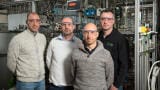
Chemical separation processes such as distillation are estimated to account for around 10 to 15 per cent of global energy consumption, and conventional porous materials often struggle to distinguish molecules of similar size. The team, led by Professor Akiko Hori alongside graduate students Masahiro Abe and Tomoki Jitsukata, and Professor Ryotaro Matsuda of Nagoya University, set out to test whether a crystal could instead adapt its internal space to incoming molecules.
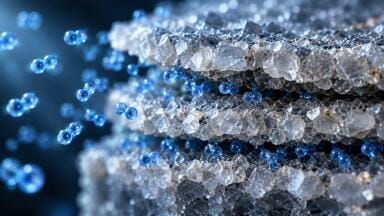
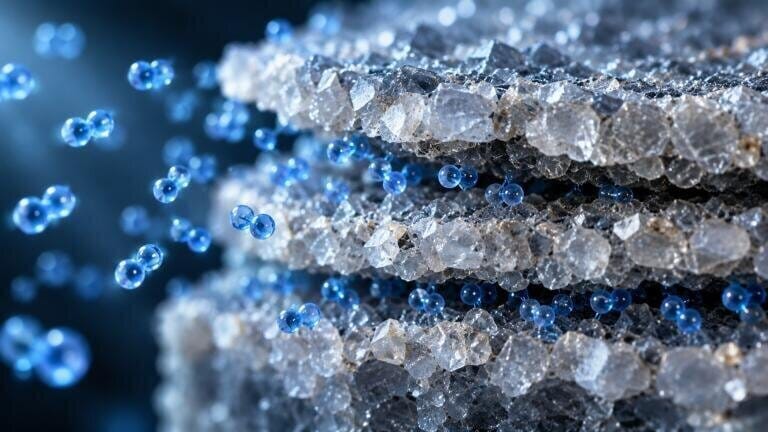
The resulting interlayer adaptive crystal, made of thin layers that can move apart when specific molecules approach, contains ultramicropores of around 2.6 ångströms in its guest‑free state – too small to admit CO₂ directly, but able to act as triggers. Fluorinated aromatic surfaces create positively polarised regions that favour molecules with complementary electrostatic properties; when a suitable molecule approaches, the layers expand to let it in.
"Rather than relying only on molecular size, we focused on the characteristic negative quadrupole moment of CO₂ and sought to use electrostatic complementarity as a new principle for selective separation," Professor Hori said. "The layered crystal unexpectedly showed that its interlayer space could expand in response to guest molecules."
At 195 kelvin, the crystal showed appreciable CO₂ uptake at pressures as low as 2.0 pascals, and it continued to separate CO₂ from nitrogen and methane at 303 kelvin, including under highly humid conditions. The material also preferentially captured benzene over hexafluorobenzene, cyclohexane and cyclohexene in competitive tests, reaching around 97 per cent of its benzene‑inclusion capacity despite benzene molecules being more than twice the diameter of the material's intrinsic pores.
The researchers say the mechanism could support more energy‑efficient CO₂ capture as well as the separation of other closely related organic compounds that are difficult to distinguish using conventional methods. The findings are published in Angewandte Chemie International Edition.
AET 30.4 Nov 2026


 Product directory