Air quality monitoring
Published over 6 years ago. See the latest and most current information on Air quality monitoring.
Minnesota Pollution Control Agency (MPCA) has been monitoring Minnesota’s air quality for a number of years, and it is generally considered to be good. However, MPCA wanted to understand how air pollution varies across small distances in order to minimise vulnerable communities’ exposure to harmful pollutants.
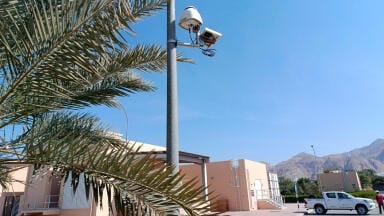
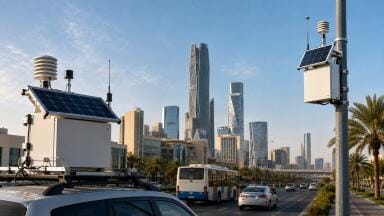
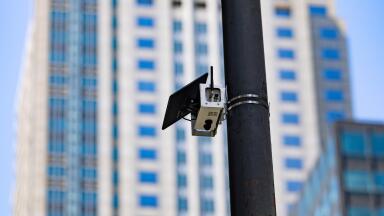
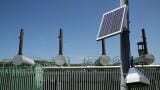
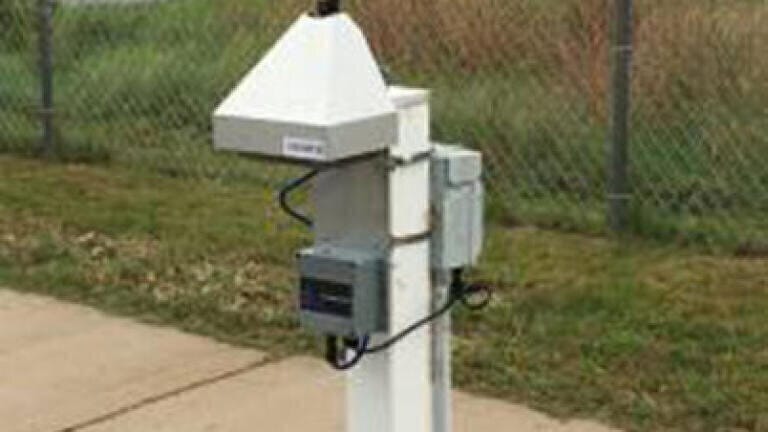
Following project funding* in 2017, earlier this year MPCA successfully installed Environmental Instruments’ AQMesh pods across 44 sites in neighbourhoods around Minneapolis and St. Paul, primarily on lampposts in school car parks, with at least one pod in each ZIP code.
MPCA gives high priority to community involvement and sharing its air quality data with the public. It has launched an online tool allowing citizens to compare pollution levels at different monitoring sites over a given date range. Monika Vadali, Ph.D, who is leading the project, welcomes feedback on the online tool and the wider project and is looking forward to hearing comments from communities where monitoring is taking place.
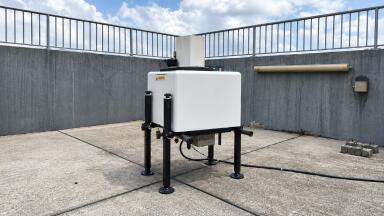
Prior to being deployed across Minneapolis and St. Paul, the AQMesh pods were co-located against the FEM station at Blaine airport for a number of months in order for the readings to be compared and validated, and for scaling to be applied if necessary. During the co-location period AQMesh showed high levels of pod-to-pod precision, with an average R2 of 0.94 for NO2, despite extreme weather conditions.
For the next two years, the AQMesh pods will monitor and report data on levels of NO2, O3, NO, SO2, CO, PM2.5 and PM10 in 44 areas of Minneapolis and St. Paul to build up a picture of air quality across the cities. Scientists at MPCA will use the data to determine if there are any significant differences in the concentration of pollutants between ZIP codes, if there are any areas with unusually high levels of pollution, and if technology such as AQMesh is suitable for measuring such small variations in air quality.
The study is similar to the Breathe London project in the UK, where 100 AQMesh pods have been deployed across London to publish a real-time map of the city’s air pollution, which has now also been launched online.
IET Guide 2026

 Product directory