Air monitoring
Published over 2 years ago. See the latest and most current information on Air monitoring.
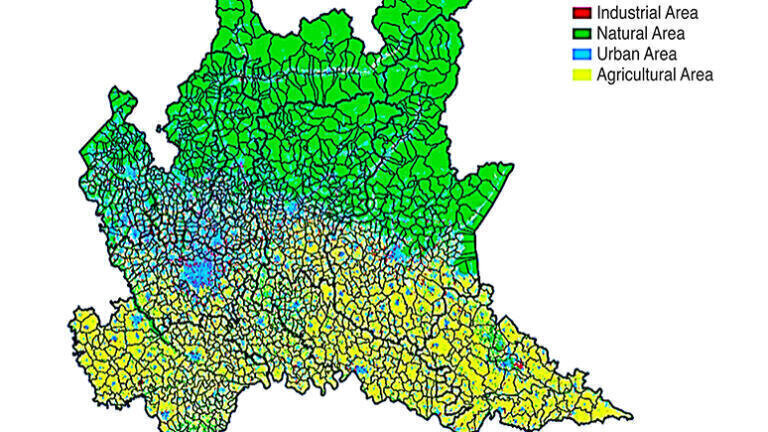
A recent study conducted by researchers at Politecnico di Milano and published in the journal Chemosphere has shed light on the significant impact of agricultural activities on the distribution of fine particulate matter (PM2.5) in Lombardy. The findings indicate that this impact rivals that of other well-known sources of pollution, including urbanisation, industry, and transportation.
The study, which focused on both rural and densely populated areas, revealed that agricultural activities contribute notably to pollution spikes rather than a consistent baseline increase. Among the crops analysed, corn and cereal fields were found to have a particularly significant impact on pollution levels, while rice fields showed minimal impact.
Employing an innovative framework and data-driven model, the researchers were able to precisely evaluate the influence of different land uses on the spatial distribution of PM2.5 concentration. This approach, which surpasses existing models in accuracy, utilised Earth observation data from satellites and atmospheric models from the Copernicus program, along with information on land use obtained from open-access databases and the agricultural information system of the Lombardy Region.
The research leveraged an advanced GEOAI (Geomatics and Earth Observation Artificial Intelligence) system, comprising a three-step architecture, to measure and interpret spatial dynamics on a local scale. This system enabled the comparison of the effects of various land uses on pollution, providing valuable insights into pollutant concentration resulting from agricultural activities such as fertilisation and manure spills.
The study was part of the D-DUST (Data-driven Modelling of Particulate with Satellite Technology aid) project, funded by the Cariplo Foundation. The project aimed to assess the potential operational efficiency, cost-effectiveness, and accuracy of integrating non-conventional data, particularly satellite data and agriculture-related pollutant emissions, into traditional PM2.5 monitoring approaches reliant on ground stations.
Led by Professor Maria Brovelli and Dr. Daniele Oxoli from the Department of Civil and Environmental Engineering, the project involved collaboration with Professor Enrico Caiani and Dr. Lorenzo Gianquintieri from the Department of Electronics, Information, and Biomedical Engineering at Politecnico di Milano, as well as Dr. Santoni from the Fondazione Politecnico di Milano and Professor Andrea Spinazzè from the Università degli Studi dell'Insubria.
IET 36.5 Sept/Oct 2026



 Product directory

















.jpg)